

How to Build a High-Converting Waiting List for Your Business
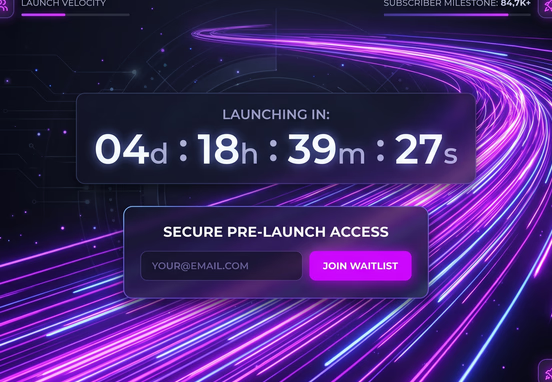
Launching a new enterprise service line, custom software application, or premium product offering without a pre-validated audience introduces severe operational risks. Many founders invest substantial capital, development hours, and marketing resources into building a platform, only to experience complete silence on launch day. This lack of market traction occurs because they treated audience building as a final, post-development task. To insulate your business from launch failure, you must build a technical waiting list framework that qualifies intent, builds high anticipation, and secures transactional commitments before your core asset ever debuts.
A high-converting waiting list is not a simple, passive email capture box buried in a generic landing page footer. It is an active conversion engine engineered to gauge real market demand, filter out low-value subscribers, and establish an early database of highly qualified corporate buyers. When structured correctly, your waitlist pipeline creates a powerful psychological sense of scarcity and exclusivity, transforming passive internet browsers into highly motivated buyers who are ready to complete transactions the moment your platform goes live.
Building a pre-launch capture system requires an understanding of user experience optimization, data integration pipelines, and frontend speed performance. If your pre-launch page loads slowly or features a confusing navigation layout, users will abandon the signup process before entering their data. By building a lightweight, highly secure, and strategically structured waiting list framework, you protect your launch capital and establish a predictable path toward revenue generation from day one.
The Psychology of the Waitlist: Scarcity, Exclusivity, and Validation
An effective waiting list leverages fundamental principles of human behavioral psychology to drive high conversion numbers. By limiting initial access to your product or service line, you increase its perceived value within your marketplace. People naturally desire assets that appear exclusive, limited, or hard to obtain. When you frame your launch as a restricted, cohort-based rollout, you transform a standard sales pitch into a highly coveted opportunity.
This pre-launch phase also serves as the ultimate mechanism for validation. Instead of relying on superficial customer surveys or optimistic projections, a waiting list requires users to provide their contact data, professional details, and behavioral commitments to secure a spot in line. This empirical data shows you exactly who is willing to pay for your solution, allowing you to fine-tune your core positioning to match real market intent before completing final development.
To maximize your pre-launch conversion numbers, your copy must clearly articulate your value proposition without overwhelming users with unnecessary text. Reviewing the core mechanics of how to write high-converting website copy headlines value propositions and about us pages that build trust gives your marketing team the exact structural tools needed to draft clear, compelling copy that drives high waitlist signups.
Architecture of a High-Converting Pre-Launch Page
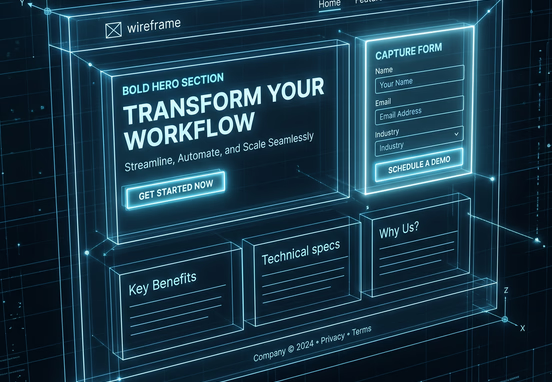
A pre-launch landing page must be incredibly focused. Unlike a broad corporate portal that features multiple services, external links, and complex resource libraries, a waitlist asset has one operational goal: capturing qualified user data. Any element that distracts from this singular focus must be ruthlessly stripped out of your page design.
The layout should feature a bold header that explicitly states the primary benefit of your solution, a secondary value statement that builds immediate authority, a concise list of core features, and a prominent, frictionless data capture form. Remove your standard header navigation and footer link arrays to eliminate all escape paths, forcing users to choose between joining the exclusive waitlist or leaving the domain.
Dynamic Interaction and Data Layer Architecture
To maximize user engagement, your waiting list interface should feature real-time, interactive feedback elements. When a user submits their information, the page should dynamically transition to show their current queue position, total verified signups, or personalized referral links without forcing a full page reload.
Managing these advanced interactive features requires an underlying code architecture that executes smoothly on mobile viewports. Reviewing the core principles of the art of micro interactions code details that feel premium shows your engineering team how to build sleek, high-performance visual feedback loops that make your waitlist signup process feel premium.
Operational Metrics: Waitlist Benchmarks and Pipeline Health
The table below establishes clear target benchmarks for auditing the performance, data quality, and long-term conversions of your pre-launch waiting list pipeline:
| Waitlist Pipeline Metric | Underperforming | Highly Optimized Target | Direct Operational Impact |
|---|---|---|---|
| Landing Page Conversion Rate | < 5.0% | > 20.0% | Maximizes the financial return on your initial pre-launch traffic investments. |
| Data Verification Rate | < 60.0% | > 92.0% | Ensures your email delivery rates remain clean and free from spam traps. |
| Referral Share Velocity | < 2.0% | > 15.0% | Drives organic loop traffic to your domain without increasing your ad spend. |
| Launch Day Transactional Conversion | < 1.5% | > 7.0% | Accelerates your initial revenue generation and validates your pricing model. |
| Platform Loading Speed (LCP) | > 3.5s | < 1.2s | Lowers user bounce rates, keeping high-intent traffic focused on your form. |
If your pre-launch metrics fall below these target thresholds, your page layout or form architecture may be introducing too much user friction. Understanding how great user experience lowers customer acquisition costs explains how optimizing your interface directly reduces user abandonment, helping you secure a much larger volume of qualified subscribers for your upcoming launch.
Step-by-Step Architecture for Waitlist Deployment
Building a highly secure, automated pre-launch waiting list framework requires a clear technical roadmap. Follow this sequence to deploy an optimized waitlist pipeline across your digital platforms.
Step 1: Secure an Ultra-Fast Domain and Landing Asset
Deploy your pre-launch framework on a clean, trusted domain name that features solid security configurations. Avoid heavy content management platforms that slow down page speeds with unnecessary software dependencies. Your landing asset must be lightweight, secure, and built to handle sudden traffic surges from social media or press mentions without crashing.
Step 2: Configure the Data Capture Engine
Design a form container that balances data collection with conversion simplicity. For consumer offers, ask only for a first name and email address to maximize conversions. For high-ticket B2B service rollouts, include a drop-down field to capture corporate sizing or specific industry sectors. This data points allow you to qualify leads before initiating sales outreach.
+────────────────────────+
│   User Enters Data     │
+────────────────────────+
           │
           ▼
+────────────────────────+
│ Capture Engine Mapping │ ──► Validate Email & Corp Tier
+────────────────────────+
           │
           ▼
+────────────────────────+
│  Format JSON Payload   │ ──► Inject Metadata (Channel/Timestamp)
+────────────────────────+
           │
           ▼
+────────────────────────+
│  Database Ingestion    │ ──► Status: pending_double_optin
+────────────────────────+
Step 3: Integrate Automated Email Verification Loops
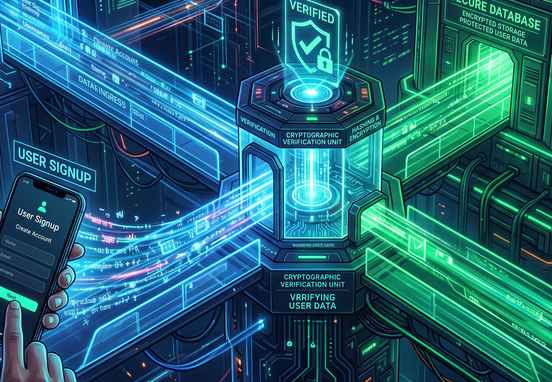
To protect your email sender reputation, always implement a double opt-in verification process. When a user submits the form, your server must instantly trigger a clean confirmation email containing a unique verification token link. If a subscriber fails to complete this confirmation step within 48 hours, remove them from your active queue to keep your outreach database clean.
Step 4: Deploy a Viral Referral Loop System
Provide confirmed subscribers with a personalized referral tracking link inside their dashboard portal. Encourage them to share the link with their professional network by offering early access priority, extended free trials, or exclusive pricing tiers for every verified signup they bring to the platform. This creates a self-sustaining viral loop that drives highly qualified traffic to your page without increasing your marketing spend.
Step 5: Test Form Pipeline Reliability Under Load Conditions
Before driving live traffic to your waitlist asset, verify that your server environment can process concurrent submissions without logging database lock errors. Open your terminal interface and run load testing scripts to ensure your API endpoints respond quickly under pressure:
+────────────────────────+
│  Apache Bench Launch   │ ──► Configure 1,000 Total Requests
+────────────────────────+
           │
           ▼
+────────────────────────+
│  Concurrent Traffic    │ ──► Simulate 50 Batched Connections
+────────────────────────+
           │
           ▼
+────────────────────────+
│   Waitlist Endpoint    │ ──► Stress Test: /api/v1/signup/
+────────────────────────+
           │
           ▼
+────────────────────────+
│ Performance Log Audit  │ ──► Confirm 0% Request Failure Rate
+────────────────────────+
The performance log should show zero failed requests and maintain a low average response time, confirming that your data collection backend is fully prepared to handle high-volume traffic surges without dropping leads.

Integrating the Waitlist with Core Platform Architecture
Building a beautiful pre-launch page is a wasted investment if your site infrastructure is slow, clunky, or difficult to navigate on mobile devices. If a user experiences rendering bugs or slow form responses during their initial interaction with your brand, they will quickly lose confidence in your technical capability and abandon your pipeline entirely.
To prevent this abandonment, your pre-launch assets must be built with speed, security, and performance as top priorities. Our professional speed-first web design and development service focuses on building clean, hand-coded frameworks that load almost instantly and function flawlessly across all viewports. This high-speed performance removes friction from your waitlist funnel, helping you capture every drop of launch-day intent.
Furthermore, a custom-coded platform eliminates the excessive script debt, security holes, and layout bugs common in generic page builders. This lightweight development path ensures that when you integrate complex database webhooks, automated verification scripts, and custom email APIs, your page speed remains completely uncompromised, giving your audience a flawless premium experience from their very first interaction.
Pre-Launch Engineering Tip: Never use complex, heavy tracking animations or multi-megabyte background videos on your waitlist page header. These elements cause severe main-thread delays on smartphones, driving up your mobile bounce rates before the user ever reads your core value proposition. Prioritize clean typography and lightning-fast rendering profiles to keep conversions high.
A high mobile bounce rate or a sudden drop-off during the verification phase indicates that your page code or form layout contains major UX vulnerabilities. Reviewing how to build high-converting landing pages ux mistakes banner blindness and psychological principles provides your team with a clear blueprint for removing visual distractions and keeping users focused exclusively on your data capture form.
Validating Long-Term Data Infrastructure Resilience
Maintaining a valuable pre-launch database requires regular system maintenance, clear engagement campaigns, and strict security compliance. Audit your database architectures monthly to purge unverified addresses, confirm that your data encryption layers comply with global privacy frameworks, and maintain regular engagement with your list through high-value email updates to prevent list stagnation before your official debut.
By moving away from passive launch strategies and building a highly optimized, automated waiting list framework, you remove the guesswork from your product rollouts. This disciplined focus on clean technical engineering, viral referral architecture, and high-performance layouts protects your development investments, giving you a predictable pipeline of enthusiastic, high-converting buyers the exact second your brand goes live.