
Why Your Website Isn't Showing Up on Search Engines: Monitoring Indexing Health and Fixing Broken Links via Search Console
A website that remains invisible to search engine crawlers represents a complete failure of your digital distribution network. Many business owners assume that purchasing a domain name and publishing content automatically guarantees a presence on search result pages. In reality, modern search bots follow strict algorithmic protocols to crawl, parse, and render code before adding a page to their massive index registries. If your infrastructure fails these technical checks, your pages will be systematically ignored.
Failing to achieve search index visibility cuts your business off from organic target prospects. When a consumer inputs a high-intent keyword query into a search engine, the system only scans pages that have successfully passed through its processing pipeline. If your platform suffers from hidden technical errors, missing canonical tags, or broken routing architectures, your target audience will land directly on an optimized competitor's page instead.
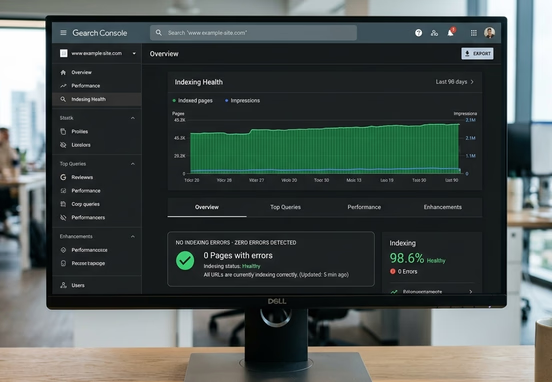
Diagnosing search visibility drop-offs requires moving past visual layout inspections and diving straight into technical indexing health. Google Search Console functions as the primary diagnostic lens for evaluating how search bots interact with your raw codebase. By systematically monitoring this infrastructure telemetry, technical teams can pinpoint the exact server errors, crawl blocks, and broken links that are actively holding back your organic performance metrics.
Navigating the Search Console Indexing Engine
Search engine crawlers operate within tight constraints known as crawl budgets. A crawl budget determines the maximum number of pages a search bot will scan on your domain during a single session. If your architecture is clogged with heavy media files, redundant scripts, or complex nested redirects, the crawler will exhaust its allocated energy before discovering your primary marketing and service pages.
Indexation is a multi-stage manufacturing line for data organization. First, the bot discovers a URL path through an XML sitemap or an inbound backlink. Next, it crawls the page by downloading the underlying source code. Finally, it parses the text, maps structural entities, and indexes the content to make it retrievable for searchers. A breakdown at any single phase in this chain keeps your platform completely hidden from the public web.
Understanding these mechanical milestones allows webmasters to troubleshoot visibility drops with clinical accuracy. Instead of endlessly rewriting page content, technical optimization focuses on clearing the technical roadblocks that cause search engines to reject your URLs entirely. This systematic approach forms the foundation of blogging for growth and building a high-ranking web article that sustains long-term market interest.
Indexing Classifications and Error Resolution Mechanics
Google Search Console categorizes non-indexed pages into distinct bucket states within its Page Indexing Report. Each classification points directly to a specific technical or structural failure occurring across your platform's directories. Misinterpreting these diagnostic categories leads to misallocated development hours and unresolved performance bugs.
| Search Console Index Status | Core Technical Root Cause | Primary Operational Solution Protocol | Risk Level to Organic Traffic |
|---|---|---|---|
| Discovered - currently not indexed | Crawler found the URL route but the server response or budget constraints delayed scanning. | Optimize server processing speeds, clean sitemap references, and reduce payload bloat. | High (Indicates severe server lag or crawl budget waste) |
| Crawled - currently not indexed | Bot fully parsed the code framework but judged the content value or quality insufficient to index. | Enhance content structural depth, correct layout spacing, and fix copy issues. | Critical (Signals severe value or quality alignment failures) |
| Server error (5xx) | The host server crashed or timed out during the crawler's resource handshake. | Audit server resource allocations, upgrade hosting tiers, and debug script errors. | Critical (Triggers rapid ranking drops across the domain) |
| Excluded by ‘noindex’ tag | The page source contains an explicit programmatic command blocking indexation. | Review the document head node and eliminate incorrect <meta name="robots"> directives. | Low (Unless active transactional landing pages are affected) |
| Soft 404 Failure | The page displays a missing or empty message layout but returns a successful 200 HTTP state code. | Configure the web server to return a genuine, clean 404 response state header. | Medium (Confuses crawlers and dilutes link equity distribution) |
Resolving these status blocks requires a disciplined data review. For instance, a high volume of "Crawled - currently not indexed" notifications often indicates that your pages lack the unique information density and technical polish required to justify storage space within global data centers.

Eliminating Broken Links and 404 Response Loop Friction
Internal cross-linking infrastructure acts as the directional highway network for both real website visitors and search engine crawling scripts. When an application contains dead text links, broken button modules, or missing image resources, the user journey stalls immediately. This structural decay introduces immediate friction that erodes transactional trust.
A high concentration of broken links tells search engine algorithms that a platform is unmaintained and abandoned. This systemic neglect directly damages your organic quality score, mirroring the business consequences discovered when analyzing why outdated information drives customers away from your website.
To clean out these dead ends and restore pristine data flows across your domain, execute the following ordered diagnostic protocol:
- Isolate 404 Errors via Search Console: Access your GSC dashboard, navigate directly to the Page Indexing logs, and filter for explicit 404 response codes.
- Trace the Inbound Referral Source: Click on each broken URL item to reveal the exact internal pages containing the dead hyperlink.
- Update or Erase the Dead Reference: Open your primary code repository, navigate to the source page, and either update the path to a modern equivalent or remove the broken tag.
- Establish Server-Side 301 Redirect Rules: For legacy pages that have been permanently migrated, inject absolute, permanent status codes to pass old link equity forward.
- Trigger Validation Recrawls programmatically: Use the GSC tracking panel to alert search bots that the structural errors have been corrected, forcing a fresh validation scan.
Rebuilding the Crawl Path with Deterministic Sitemap Architectures
An XML sitemap serves as a programmatic road map that guides search crawlers through your company's most valuable landing pages. If your sitemap contains missing pages, duplicate links, or unoptimized redirect chains, search engines will lose track of your internal structure.
Custom code frameworks allow technical teams to generate dynamic, automated sitemaps that update in real-time whenever structural content changes are made to the codebase. This ensures search engines discover fresh content instantly without manual manual updates.
The following data layout schema demonstrates how a clean, automated site configuration structure defines absolute index targets while keeping search crawlers away from low-value internal directories:
[ Start: Target Sitemap URL ]
             │
             ▼
┌────────────────────────────────────────┐
│          Crawl Priority Rules          │
└────────────────────────────────────────┘
             │
             ├─► Enforce Absolute URLs: TRUE
             │
             ├─► Exclude Directories
             │   ( /staging/*, /tmp-cache/, /admin/internal/ )
             │   └──► [ BLOCK CRAWL ]
             │
             └─► Allow Indexing Patterns
                 ( /services/*, /blog/*, /case-studies/ )
                 └──► [ PROCEED ]
                           │
             ┌─────────────┘
             ▼
┌────────────────────────────────────────┐
│       Indexing Validation State        │
└────────────────────────────────────────┘
             │
             ├─► Enforce Self-Referencing Canonical: TRUE
             ├─► Clean Server Response Target: 200 OK
             │
             ▼
┌────────────────────────────────────────┐
│         Redirect Chain Check           │
└────────────────────────────────────────┘
             │
             ├─► [ YES ] ──► [ Terminate & Alert Developer ]
             │
             └─► [ NO  ] ──► [ Safe for Engine Indexation ]
Deploying automated sitemap protocols ensures your site organization remains perfectly transparent to global indexing engines. This transparency prevents your high-value marketing pages from getting buried beneath unoptimized subfolders or temporary system cache files.
The Core Architectural Flaws Blocking Indexation Engines
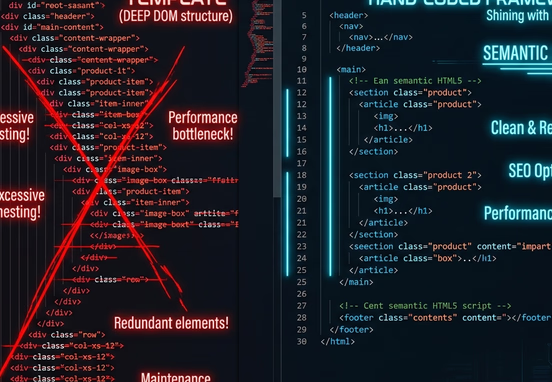
Many indexation and visibility issues stem directly from the underlying technology stack of the website. Monolithic drag-and-drop website builders, fragile template plugins, and heavy CMS wrappers frequently inject thousands of lines of unoptimized, non-semantic HTML layout tags around basic text content. This systemic bloat is a primary reason why relying on rigid template systems destroys local search visibility, forcing local businesses to lose ground to competitors with cleaner, bespoke codebases.
When a search bot encounters an excessively deep DOM structure, it must waste computational power deciphering nested containers just to parse a basic heading tag. This rendering block often triggers crawl timeouts, which explains why clean, hand-coded web architecture beats page builders for technical SEO and guarantees consistent search visibility.
Custom-coded websites use lean, semantic structural tags that allow search bots to index your pages with zero computational delay. This structural efficiency keeps your indexing pipelines running clean, preventing the unforced technical errors that drop template-built sites out of organic rankings.
Optimizing Discovery via Pristine Metadata Assets
Even when a page successfully passes through the indexing pipeline, it can still struggle to attract traffic if its search display tags look broken or unappealing. Search engines pull directly from your hidden document head elements to construct the blue clickable links and descriptions displayed in user search results.
Ensuring your underlying metadata contains concise, keyword-rich statements is essential for converting cold searchers into website clicks. To maximize this traffic pipeline, you must learn what a meta description is and how to write one perfectly to capture human intent and boost your click-through efficiency.
The Permanent Maintenance Playbook for Search Visibility
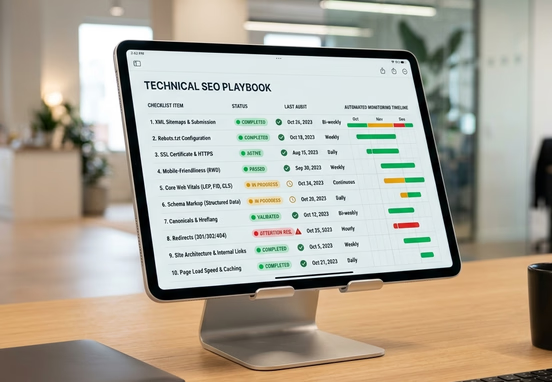
Maintaining high search visibility requires moving past ad-hoc checks and establishing a strict, continuous maintenance routine. Running systematic technical audits ensures your platform remains completely clear of indexation bugs throughout the fiscal year.
Treating technical maintenance as a fixed operational priority protects your digital marketing investments. Focus your internal web teams on this continuous technical verification checklist:
- Weekly Search Console Diagnostics: Monitor the indexing status logs to flag and resolve sudden crawl drops or server timeouts before they impact live rankings.
- Automated Link Validation Cycles: Run weekly crawling scripts across your domain to catch and fix broken 404 link routes and asset paths programmatically.
- Sitemap and Canonical Sync Audits: Verify that all active service landing pages and blog articles contain matching self-referencing canonical attributes.
- Server Response Velocity Tracking: Measure Time to First Byte (TTFB) across multiple device viewpoints to prevent slow data delivery from causing crawl budget exhaustion.
Technical Indexation Directive: Never rely on automated plugins to manage your site's canonical link declarations. If your backend platform auto-generates conflicting canonical paths for parameters like sorting configurations or mobile layouts, search bots will flag your content as duplicate and drop it from search results. Always hand-code absolute canonical rules into your master document header templates to secure your indexing health.
Securing Search Dominance via Performance Engineering
Long-term marketplace authority belongs to organizations that treat their digital footprint as high-performance infrastructure requiring a stable technical foundation. Leaving indexation blocks, broken links, and server lag uncorrected creates an unstable environment that quietly drops your site out of organic search results.
Investing in tailored, bespoke web engineering eliminates the platform bloat, slow rendering paths, and database pollution that cause search engine engines to drop your pages from their registries. When your website operates as a fast, clean application, search crawlers can index your content instantly, securing your organic reach and driving market sales.
Build a high-performance, search-optimized platform designed to maximize your organic visibility using our elite speed-first design and development services.