What Is a Meta Description and How Do You Write One for Your Site

A meta description is the short snippet of text that appears beneath your website title on a search engine results page. While it does not directly impact algorithmic keyword rankings, it acts as organic ad copy for your brand, determining whether a user clicks through to your site or skips to a competitor.
Leaving your metadata unoptimized allows search engines to scrap random sentences from your page body. This results in fragmented text strings that damage brand credibility.
Understanding the Technical Architecture of Meta Tags
Every page on a modern business website requires a dedicated snippet of code within the HTML head element. This snippet communicates directly with search engine crawlers before the page even renders for a visitor.
Search engine crawlers analyze these tags to index page summaries accurately before displaying them to users.
Here is what a clean, standard HTML meta description looks like in your source code:
+-------------------------------------------+
|        Search Engine Crawler Scans        |
|                 HTML Head                 |
+-------------------------------------------+
                      |
                      v
+-------------------------------------------+
|       Extracts Meta Description Tag       |
+-------------------------------------------+
                      |
                      v
       Does text meet pixel/char limits?
           /                         \
         Yes                         No
         /                             \
        v                               v
+-----------------------+   +-----------------------+
| Displays Full, Clean  |   | Truncates Snippet with|
| Compelling Snippet    |   | An Ellipsis (...)     |
+-----------------------+   +-----------------------+
        \                               /
         \-----------------------------/
                        |
                        v
+-------------------------------------------+
|     User Analyzes Value Prop and CTA      |
+-------------------------------------------+
                        |
                        v
+-------------------------------------------+
|   Maximizes Organic Click-Through Rate    |
+-------------------------------------------+
When executing a performance-focused strategy, this raw code snippet is just as vital as your visible text layer. Incorporating this correctly into your site architecture ensures your digital footprint looks polished and highly click-worthy across all search platforms.
The Real Impact on SEO and Click-Through Rates
A common misconception is that filling out your metadata will automatically boost your keyword positioning. Google officially stated that meta descriptions are not a direct ranking factor in their algorithmic calculations.
However, treating them as irrelevant is a critical strategic blunder because they directly dictate your organic Click-Through Rate (CTR). A higher CTR indicates to search algorithms that your page provides highly relevant answers to user queries, which indirectly strengthens your long-term search positions.
If you are currently diagnosing why your website isn't showing up on search engines, missing metadata or misconfigured indexation tags are often a primary culprit. Aligning your snippet with true user intent ensures that when your page does appear, it captures maximum attention.
Character Counts and Pixel Width Constraints
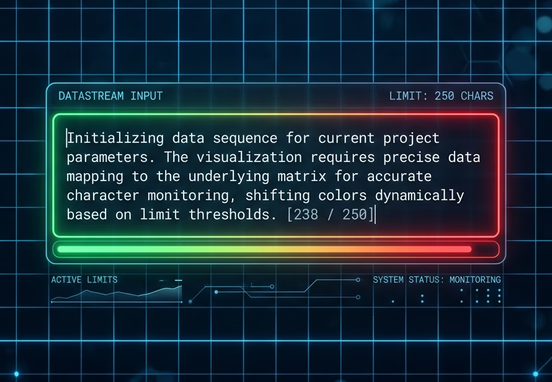
Writing an effective meta description requires balancing persuasive copy with strict spatial limits. Search engines do not measure snippets by character count alone; they measure them using precise pixel widths.
If your snippet exceeds the designated pixel limits, the search engine will truncate the text with an ellipsis (...), destroying your call to action and muddying your value proposition. Conversely, an overly short description looks weak and fails to claim enough digital real estate on the screen.
| Device Type | Ideal Character Count | Maximum Pixel Width | Optimal Usage Strategy |
|---|---|---|---|
| Desktop Screens | 150 - 160 characters | ~960 pixels | Maximize value propositions and include a direct call to action at the end. |
| Mobile Displays | 110 - 120 characters | ~680 pixels | Front-load your primary keyword so it remains visible on smartphones. |
| Short Snippets | Under 70 characters | Under 400 pixels | Avoid this completely. It leaves valuable search engine layout space blank. |
Pro Tip: Always front-load your most critical information and high-intent keywords within the first 100 characters. This guarantees that even if a mobile device cuts the description short, your primary business offering and value metric remain perfectly legible to the searcher.
The Anatomy of a High-Converting Meta Description
An elite meta snippet functions exactly like a paid search advertisement. It must capture attention, communicate unique value, and prompt immediate action within a single glance.
To achieve this level of performance across your entire domain, follow this proven structural blueprint for every single page you publish:
- Integrate the Primary Keyword Naturally: The search query used by the searcher will appear in bold within your meta description if it matches your text. This visual cue instantly draws the reader's eye to your link.
- State a Clear Value Proposition: Explain exactly what the user will gain by clicking your link. Avoid vague corporate speak and focus heavily on concrete solutions or definitive answers.
- Incorporate an Action-Oriented Call to Action: End your snippet with an active command. Phrases like "Learn how to optimize your setup," "Download the checklist," or "Explore our custom packages" force passive scrollers to make a conscious decision.
- Eliminate Non-Alphanumeric Characters: Avoid using double quotes within the content field of your meta tags. Search engines often strip out HTML characters, which can break the code block entirely and cause early truncation.

Custom Copywriting Frameworks for Diverse Page Formats
Every page format across your digital architecture addresses distinct user search intents.
Homepage Architecture
Your homepage metadata must act as the definitive global summary of your entire enterprise. It needs to establish immediate trust, specify your exact operational industry, and declare your primary target demographic. Focus entirely on your singular overarching mission and follow it with a brand-defining statement that sets you apart from competitors.
Core Service Pages
Commercial pages need to focus directly on pain points, deliverables, and operational benefits. The user is actively seeking a solution, meaning your copy must sound authoritative, capable, and immediately accessible.
When building out high-performance enterprise assets through our dedicated speed-first design services, we treat your search metadata as an extension of the user interface. The snippet must transition seamlessly into the landing page experience without a single drop in messaging quality.
Informational Blog Content
Blog snippets should provoke curiosity or promise a definitive fix for a highly technical challenge. You are competing with thousands of other informational resources, so your copy must highlight the depth and structure of your educational material.
As we emphasize in our strategic guide regarding blogging for growth and high-ranking articles: every individual blog entry requires custom metadata tailored around the specific long-tail keywords driving that article's traffic pipeline. Never reuse boilerplate summaries across your blog library.
Landing Page Optimization
Standalone landing pages built for marketing campaigns require hyper-focused, conversion-centric metadata. These snippets must precisely mirror the exact hook used in your external marketing campaigns to maintain a fluid user journey.
Properly aligning these snippets reduces immediate bounce rates, working in perfect harmony with standard frameworks for high-converting landing pages and psychological UX principles to maximize the economic return on your organic traffic.

Why Search Engines Rewrite Metadata
It is common to find that Google has ignored your manually written meta description and replaced it with a custom excerpt pulled directly from your page content. This occurs because search engines utilize advanced semantic processing to match snippets dynamically to specific user queries.
To prevent search engines from overriding your copy, avoid these common execution mistakes:
- Keyword Stuffing: Cramming a long string of disconnected keywords into your description tag looks spammy to search crawlers and users alike, forcing algorithmic overrides.
- Mismatched Search Intent: If your snippet promises a free template but the destination page is a high-priced commercial check-out form, the crawler will override your snippet to represent the asset accurately.
- Duplicated Metadata Assets: Using the exact same meta description tag across different pages causes massive crawl confusion, leading search engine algorithms to ignore your tags entirely.
Technical Validation Workflows
Managing a growing web architecture requires continuous auditing of your indexation health and snippet performance. Technical debt can rapidly accumulate if pages are left unmonitored for months at time.
Utilize specialized crawling tools to run monthly diagnostics on your entire site directory. Look specifically for missing description tags, duplicate metadata rows, and snippets that transcend the maximum pixel thresholds.
Once you have identified problematic pages, cross-reference their organic performance inside your technical search console. Look closely at pages that possess high impressions but critically low click-through rates. A low CTR on a page positioned near the top of search results is a clear signal that your current meta description is failing to engage human searchers and needs an immediate structural rewrite.
By systematically refining your metadata, keeping code footprints light, and matching human search intent with absolute precision, you turn your standard organic listings into a highly predictable client acquisition engine.