

How to Integrate a High-Converting Email Newsletter into Your Site

Email capture infrastructure forms the foundation of a resilient digital monetization strategy. When a business relies entirely on third-party communication networks to reach its target audience, it operates under constant vulnerability. Implementing a high-converting email newsletter enrollment architecture directly into your company website establishes an unmediated, secure communication pipeline with your market prospects.
The primary objective of a subscription mechanic is to convert volatile anonymous traffic into structured, predictable database entries. A casual website visitor frequently exits an application without taking transactional action, often forgetting the brand completely within hours. Capturing an email address preserves that initial customer acquisition value, allowing you to nurture the prospect over an extended period without buying additional ad inventory.
Building an efficient newsletter collection platform requires a careful combination of technical performance engineering, interface layout design, and psychological incentive mapping. It is not enough to simply paste a generic registration box into your page footer and expect readers to surrender their contact data. The interface must be fast, intuitive, and seamlessly woven into the user's natural reading flow.
Architectural Positioning Strategy for Maximum Subscription Volume
Strategic placement dictates the baseline conversion performance of your newsletter capture elements. Forms placed in dead zones where user attention naturally drops will fail to generate results, regardless of how compelling your incentive copy is. Conversely, forms that disrupt the core task of the reader create immediate frustration and increase session abandonment.
To maximize opt-in rates without compromising the overall user experience, you must match form placement with user intent stages. This alignment ensures that the subscription request occurs exactly when the consumer recognizes the true value of your industry insights.
- Deep Contextual Inline Captures: Placing signup modules directly inside long-form educational articles provides an organic transition point for highly engaged readers. Position these forms immediately following an impactful insight where the user is naturally looking for the next step.
- The Value-Driven Sticky Header Bar: A low-profile, non-obtrusive bar running along the top of the viewport keeps your core newsletter offer visible during scrolling actions without blocking readability.
- Strategic Exit-Intent Overlays: Unlike timed pop-ups that interrupt an active reader, exit-intent triggers evaluate mouse trajectories or scroll acceleration to present an offer only when a user signals an intention to leave your ecosystem.
- The High-Focus Dedicated Landing Interface: For direct marketing campaigns, a dedicated single-purpose page stripped of main site navigation funnels all cognitive focus onto a single option: subscribing or exiting.
When designing these capture environments, your messaging must match the broader branding framework. Crafting compelling headings and input prompts is simple when you understand the foundational principles of writing high-converting website copy that builds trust.
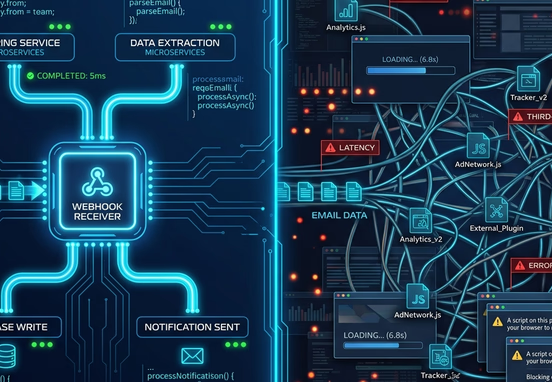
Technical Architecture: Native API Hooks vs. Heavy Script Injection
The engineering behind your email newsletter form directly impacts your site's operational efficiency and search engine visibility. Most marketing teams rely on copying and pasting generic, unoptimized JavaScript snippet tags provided directly by email service providers (ESPs). These snippets load bloated, non-cached styling frameworks and external tracking scripts that destroy performance parameters.
Every external script injected into your codebase forces the user's browser engine to halt rendering while it downloads, parses, and executes the third-party asset. This lag introduces severe layout shifts and delay patterns that directly push potential subscribers away from your platform before they can type an input.
              [ User Input ]
                    │
                    ▼
┌────────────────────────────────────────┐
│  Lightweight Frontend Form (HTML/CSS)  │
└───────────────────┬────────────────────┘
                    │
                    │ Asynchronous POST Request
                    ▼
┌────────────────────────────────────────┐
│   Backend / Serverless Edge Function   │
│      (/api/newsletter-subscribe)       │
└───────────────────┬────────────────────┘
                    │
                    │ Secure API Webhook
                    ▼
┌────────────────────────────────────────┐
│      Email Service Provider (ESP)      │
└────────────────────────────────────────┘
A high-performance implementation handles subscription data processing via server-side asynchronous API requests. The frontend form remains lightweight, semantic HTML and CSS, sending data securely to your backend or serverless edge function. The edge function then connects directly to the ESP via a secure API webhook, leaving the user interface completely unburdened by third-party tracking weight.
This optimized execution ensures that your lead generation tools work in tandem with your broader performance metrics. Protecting your site from technical bloat is necessary for maintaining the speeds required to reach a good conversion rate for a hand-coded website.
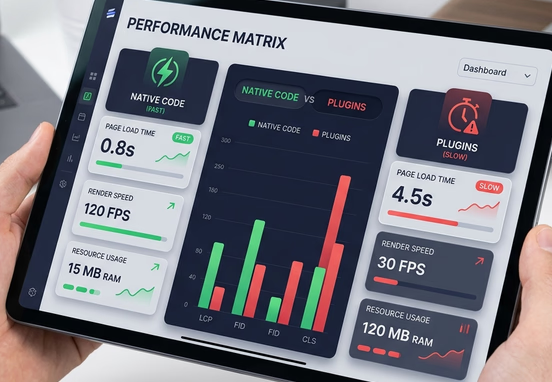
Performance Matrix: Data Collection Methods Compared
Choosing how your data forms render inside a browser dictates your long-term subscriber growth curve. Choosing the wrong technical implementation introduces friction that reduces user acquisition numbers across mobile ecosystems.
| Integration Framework Type | Average Page Velocity Impact | Mobile Interface Score | Security Risk Rating | Baseline Opt-in Conversion Efficiency |
|---|---|---|---|---|
| Native Hand-Coded Server API | < 50ms Latency | Exceptionally High | Extremely Low | 4.8% - 8.5% |
| Standard JavaScript Snippet Embedded | +800ms Latency | Moderate to Low | Medium | 1.8% - 3.2% |
| Third-Party iFrame Container | +1.2s Latency | Consistently Poor | High | 1.0% - 1.9% |
| Multi-Plugin Marketing Suite Modals | +2.1s Latency | Deficient | Exceptionally High | 0.8% - 2.1% |
Native, custom integrations consistently outperform generic alternatives because they respect the browser’s computational limitations. By serving clean layouts, you eliminate the mechanical barriers that cause users to abandon signup flows on mobile touchscreens.
Interface Optimization and Friction Reduction Mechanics
The number of form fields present within your subscription module is inversely proportional to your total conversion rate. Requiring a prospect to share their full name, job title, company size, and phone line just to receive a weekly newsletter creates massive psychological friction.
For standard newsletter enrollment, restrict your inputs to a single, high-visibility email address field. If secondary customer segmentation data is necessary for your sales funnel, collect it on a post-submit confirmation screen after the primary registration transaction is already completed.
Streamlining Mobile Input Touch Targets
Mobile users operate screens using their thumbs, making precision tapping difficult on poorly spaced forms. Ensure your email input boxes and submission buttons feature a minimum vertical height of 48 physical pixels, surrounded by clean negative space.
Utilize HTML5 input types explicitly, setting the field attribute to . This simple code adjustment forces modern mobile operating systems to display a customized keyboard featuring the "@" and ".com" keys prominently, removing typing frustration.
Real-Time Validation Micro-Interactions
Waiting for a page reload to discover a typo in an email address destroys the user momentum. Implement real-time, asynchronous client-side validation that monitors syntax as the user types.
Provide subtle visual indicators, such as a soft green border or a small checkmark icon, the instant a valid email pattern is verified. If the syntax is incorrect, display clear, supportive error messaging before the submission action occurs.
Conversion Architecture Directive: Always design your form submission states to process asynchronously in the background. Never force a full-frame page refresh when a subscriber submits their data. A clean, inline fade transition replacing the input field with a professional success confirmation note preserves the user session layout and maintains structural continuity.

Security Compliance and Modern Data Hygiene Standards
A professional digital database requires strict adherence to global data privacy mandates, including GDPR, CCPA, and updated regional security guidelines. Failing to provide transparent consent frameworks exposes your organization to severe compliance risks and degrades consumer brand trust.
Incorporate an un-ticked, clear consent checkbox explicitly detailing what type of communications the user will receive upon subscription. Link directly to your official privacy statement, ensuring that your data processing procedures are completely clear to every applicant.
Furthermore, deploying an automated double opt-in sequence ensures that your database remains free of corrupt entries, spam bots, and malicious fake emails. While this introduces an extra step for the user, it guarantees that your outbound sender reputation remains flawless, keeping your emails out of the global spam folder.
Email Captures as Protection Against Algorithmic Changes
Relying exclusively on social networks to distribute business insights represents a major operational risk for a growing firm. Social platforms utilize proprietary sorting algorithms engineered to maximize platform ad views, often suppressing your organic business reach unless you purchase sponsored placements.
Diversifying away from third-party networks secures your communication lines. Cultivating an owned distribution system is why savvy organizations realize that relying solely on social media is a massive business risk, transforming their website into a primary hub for direct audience capture. Furthermore, analyzing the trade-offs of owning your web infrastructure instead of relying on platforms like Substack highlights why scaling enterprises require absolute control over their digital assets to build genuine domain equity.
An email database represents an immutable corporate ledger of interested prospective buyers. No algorithmic update or platform policy shift can disconnect you from an audience list that you host inside an independent data structure.
Leveraging Newsletters for Enterprise and Waiting List Launches
A robust email capture setup provides massive launch leverage when introducing a new service tier or opening a new operating facility. By maintaining an active, nurtured audience pool, you eliminate the need to generate cold market interest from scratch when scaling operations.
This strategic preparation works perfectly when building a high-converting waiting list for an upcoming product or corporate rollout. An established newsletter subscriber base provides an eager pool of validation testers who already trust your engineering capabilities.
Nurtured email subscribers display significantly higher conversion intent than standard traffic sources. They have spent weeks reading your technical perspective, which translates directly into larger contract sizes and compressed sales cycles when your offers go live.
Tracking Subscription Progress with Pristine Analytics Data
To systematically improve your opt-in performance, you must establish pristine tracking parameters across your conversion pathways. Monitor your absolute signup percentage alongside specific behavioral data points like entry page origin and device split.
Reviewing user interaction recordings and heatmaps reveals exactly where users linger or show signs of typing confusion. Clean data integration ensures you are allocating resources effectively based on verified user trends rather than guesswork.
Eliminate layout obstacles and maximize your marketing pipeline efficiency by integrating your core subscription funnels into a high-performance framework with our elite speed-first design and development services.