
Avoiding Migration Headaches by Starting With Custom Source Code

Initial build decisions permanently dictate an enterprise's technical agility. Choosing a standard drag-and-drop page builder or an off-the-shelf template CMS frequently looks like an efficient shortcut for launching a basic web property. However, analyzing the performance of a bespoke digital architecture versus a standard pre-built platform illustrates how optimized deployment avoids platform overhead. This immediate convenience creates an invisible, compounding operational bottleneck. As an organization scales, its database demands, functional tracking workflows, and user interface goals inevitably outgrow the narrow limits of mass-market software structures.
This misalignment leads straight to the inevitable, disruptive platform migration crisis. Replatforming a mature corporate asset from an unoptimized environment to a high-performance system is a high-risk engineering process. Legacy databases must be extracted, nested layout files must be untangled, and complex uniform resource locator (URL) redirects must be hand-mapped. A single script error or database translation failure during this transition can cause immediate system downtime, severe data loss, and long-lasting search ranking degradation.
Opting for custom source code from day one completely bypasses this entire cycle of technical friction. Building with raw, uncompromised architecture means you design your data models, database structures, and rendering paths around the exact needs of your long-term business roadmap. You skip the artificial scaling barriers introduced by template restrictions, ensuring your platform can pivot, expand, and handle intense traffic surges without requiring an expensive, high-stress platform migration down the line.
The Invisible Architectural Friction of Legacy CMS Replatforming
When scaling businesses try to modify a website built on a mass-market template engine, they hit sudden walls in system logic. These systems bundle frontend presentation layouts directly together with backend data storage layers. Making a modification to a user-facing layout element requires risking the integrity of underlying customer data tables or secure checkout webhooks.
This structural entanglement introduces massive complications when the time comes to execute a migration. Legacy template systems often store data in highly polluted, proprietary database schemas filled with serialized arrays and unoptimized plugin configurations. Extracting this information cleanly requires writing extensive custom data translation filters just to prevent record corruption during transport.
Failing to untangle these systems early results in a continuous drain on your internal tech resources. These ongoing structural limitations illustrate the true hidden costs of DIY platforms and templates, which systematically restrict your operational agility and trap your engineering teams in a cycle of reactive bug-fixing instead of proactive feature optimization.
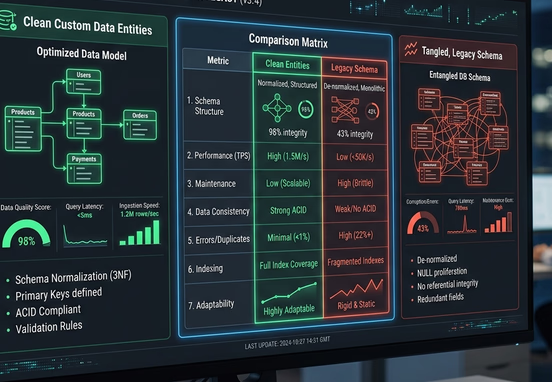
Structural Comparison of Replatforming Overhead
The differences between a template-dependent ecosystem and an independent custom source codebase become undeniable when analyzing the operational work required to scale each architecture type over a multi-year horizon.
| Migration Risk Indicator | Monolithic Template-Driven Platforms | Custom Source Code Inception Model | Long-Term Operational Outcome |
|---|---|---|---|
| Database Schema Health | Highly polluted with redundant plugin fields and serialized rows. | Pristine, normalized database entities tailored for business models. | Eliminates the need for expensive structural data cleansing sprints. |
| URL Route Determination | Enforced by rigid, auto-generated nested category folder paths. | Fully deterministic; complete control over absolute routing structures. | Prevents broken link generation and preserves organic search health. |
| Asset Pipeline Continuity | Fragile dependencies on third-party design styles and script versions. | Fully contained, independent asset modules with zero external bloat. | Insulates presentation layouts from breaking during core platform changes. |
| Data Extraction Mobility | Locked inside proprietary export formats requiring manual conversion tools. | Unrestricted data mobility via clean, industry-standard API pipelines. | Cuts out future platform lock-in costs and technical dependencies. |
| Development Velocity | Drastically slows down as teams work around platform code restrictions. | Remains consistently high due to direct, uncompromised source access. | Speeds up feature additions and deployment turnaround times. |
Starting with custom code provides your organization with a clean structural foundation, ensuring your core digital asset can grow smoothly without accumulating heavy technical roadblocks.
Protecting Inbound Traffic Integrity and SEO Visibility
A major business risk of platform migration is the sudden, catastrophic drop in organic search visibility that often occurs during a relaunch. Search engine indexing crawlers build highly specific maps of your website's URL pathways, page layout hierarchies, and asset distribution arrays over years of continuous scanning.
When you migrate a live site between different template systems, the new platform often forces changes to your absolute URL paths, adding arbitrary folder paths or altering page sluggings. This structural shift breaks your established index maps, rendering long-standing organic search listings instantly non-functional.
By utilizing clean, hand-coded web architecture from inception, you completely control your system's routing logic. You can design an immutable, highly search-optimized URL hierarchy that remains completely constant as your business scales, removing the need for high-risk, site-wide redirect campaigns.

Automated Configuration Logic for Structural Immunity
Bespoke web infrastructure allows technical teams to build highly stable, decoupled routing engines that process data requests independently of specific backend databases. This architecture ensures your user-facing interfaces remain perfectly operational even if underlying content storage solutions are upgraded.
The following programming configuration manifest demonstrates how a custom routing engine manages clean URL matching paths through deterministic pattern rules, removing platform-forced path alterations:
+-------------------------------------------------------+
|               INCOMING USER REQUEST                   |
+-------------------------------------------------------+
                           |
                           v
+-------------------------------------------------------+
|    DYNAMIC PATTERN MATCHING                           |
|    Route: ^/blog/([a-z0-9-]+)$                        |
+-------------------------------------------------------+
                           |
                           v
+-------------------------------------------------------+
|    STRICT CANONICAL ENFORCEMENT                       |
|    Status: Always Enforced                            |
+-------------------------------------------------------+
                           |
                           v
+-------------------------------------------------------+
|    PATH ISOLATION                                     |
|    Strategy: Isolated from Database ID                |
+-------------------------------------------------------+
                           |
                           +--------------------+
                           |                    |
                           v                    v
+-----------------------------------+ +---------------------------------+
| FRONTEND INTERFACE                | | BACKEND DATA PAYLOAD            |
| (Static Edge Hydration)           | | (RESTful API Handshake)         |
+-----------------------------------+ +---------------------------------+
                           |                    |
                           +---------+----------+
                                     |
                                     v
+-------------------------------------------------------+
|          MAINTAIN IMMUTABLE VIEWPORTS                 |
+-------------------------------------------------------+
Deploying independent routing mechanisms within your codebase shields your organization from systemic layout failures. This structural control isolates your consumer-facing pages from backend changes, keeping your interface stable and fast as you scale.
Decoupling Frontend Interfaces from Backend Repositories
Traditional website management frameworks process page requests on a single server machine that compiles database rows and layout styles simultaneously whenever a user clicks a link. This centralized architecture creates massive processing delays and introduces single points of failure that can crash your entire site during high-volume traffic spikes.
Bespoke programming models avoid this single-server vulnerability by decoupling your user-facing design systems from your internal content databases. This separation ensures your pages render near-instantly for visitors worldwide, matching the best practices for maximizing long-term website ROI.
Eliminating Plugin Dependencies and Version Control Debt
Template systems rely on layering dozens of third-party plugins together to handle basic functional tasks like processing forms, managing image galleries, or injecting analytics tracking codes. This reliance creates a fragile web of conflicting script libraries that must be manually updated every single week.
When one plugin author pushes an unvetted code update, it can trigger widespread errors across your entire site, breaking checkouts or corrupting layout styles. This instability shows exactly how legacy technical debt halts corporate growth, trapping your internal development teams in a continuous cycle of emergency platform repairs.
Architecture Engineering Directive: Never allow short-term convenience to dictate long-term software architecture choices. Building your platform on shared mass-market ecosystems might save days during initial setup, but it will eventually cost your business months of complex migration work and lost revenue down the road. Build with custom source code early to secure permanent data ownership and long-term tech agility.

The Operational Blueprint for Engineering Clean Scale
Protecting your enterprise asset from future migration headaches requires a strict commitment to modular programming principles. Emphasizing structural independence across your tech stack ensures that your application remains highly flexible and scalable as your business requirements expand.
Adopting a clean development process turns your software architecture into a highly stable corporate asset. Focus your engineering teams on these foundational structural rules:
- Enforce Strict API-First Data Protocols: Ensure all internal data transfers between content repositories and frontend layouts occur through standardized, well-documented REST or GraphQL API hooks.
- Isolate Presentation Layout Styles: Build user interface components using modern CSS modules or utility frameworks that prevent design settings from leaking into other parts of your platform.
- Maintain Complete Version Control History: Track every single line of custom source code through independent, secure repositories, ensuring your team can audit, trace, or roll back system modifications instantly.
- Minimize Reliance on Third-Party Hosting Libraries: Host your core functional scripts natively within your own deployment network rather than hot-linking to external vendor servers that introduce security vulnerabilities.
Securing System Longevity with Bespoke Engineering
Sustained market visibility belongs to organizations that treat their digital footprint as high-performance infrastructure requiring a stable technical foundation. Choosing cheap, template-driven shortcuts creates a mountain of technical debt that will eventually require an expensive, high-stress platform migration to fix.
Investing in tailored, hand-coded source code from day one removes the platform restrictions, plugin conflicts, and database pollution that quietly stall corporate growth funnels. When your website operates as a fast, independent application, you protect your data integrity and secure absolute control over your digital future.
Build a flexible, migration-proof digital platform engineered for infinite scale using our premium speed-first design and development services.