

How to Sync Physical Inventory with Custom Digital Storefronts

Bridging the gap between physical stockrooms and digital shelves is a critical operational hurdle for scaling retail and distribution enterprises. When an item sells over the counter at a brick-and-mortar brick location, that transactional event must propagate to the web storefront immediately. Failing to maintain a unified inventory state leads directly to overselling, corrupted data logs, frustrated customers, and operational friction that stalls business growth.
Generic e-commerce platforms often rely on rigid, pre-built integration plugins that sync inventory on fixed intervals, such as once every hour or even once per day. In high-volume environments, this latency is highly dangerous. A single unexpected viral marketing spike or a busy weekend afternoon at a physical storefront can cause significant data gaps, resulting in the digital store accepting orders for products that are already completely out of stock. Avoiding these disruptions requires building a custom web pipeline that enforces immediate, two-way state alignment between your warehouse management software and your online presence.
Technical Foundations of Omnichannel Synchronization
A resilient inventory architecture treats the physical warehouse or Point of Sale (POS) system as the definitive master record for in-store stock levels, while the digital storefront acts as a dynamic consumer-facing representation. When an inventory change occurs, whether via a physical sale, a return, or a new shipment arrival, the underlying infrastructure must process this update through a sequence of validation and distribution layers before modifying the customer-facing front end.
To ensure this pipeline survives massive traffic surges without dropping data packets, the architecture must decouple the ingestion layer from the database update layer using an asynchronous event-driven system design.
+------------------------+
|   Physical POS / ERP   |
|   Stock Change Event   |
+------------------------+
            |
            v
+------------------------+
|   Real-Time Webhook    |
|   Payload Generated    |
+------------------------+
            |
            v
+------------------------+          +------------------------+
|   API Middleware &     |------->  |     Race Condition     |
|   Deduplication Layer  |          |   Validation Control   |
+------------------------+          +------------------------+
            |                                    |
            v                                    v
+------------------------+          +------------------------+
|   Database Update:     |          |   Cache Invalidation   |
|  Storefront Inventory  |          |   (Redis / Edge Layer) |
+------------------------+          +------------------------+
By routing events through an isolated middleware layer, the custom application can sanitize payloads, check for duplicate event IDs, and handle high-volume write commands without locking up the user-facing database. This architecture guarantees that even if thousands of global shoppers are active on your web layout simultaneously, database updates occur smoothly and reliably without introducing system latency.
Core Architecture Execution Steps
To maintain an uncorrupted inventory lifecycle, every stock adjustments lifecycle must move through these fundamental server-side phases:
- Event Capture: The physical Enterprise Resource Planning (ERP) platform or barcode scanner registers a change in inventory counts and broadcasts an outbound payload.
- Ingestion and Verification: The web system filters the incoming data package, verifying cryptographic tokens to validate the origin before processing.
- Inventory State Resolution: The system cross-references the specific Stock Keeping Unit (SKU) against active digital shopping carts to calculate true available-to-promise inventory.
- Cache Cleansing: The platform purges out-of-date stock counts from the content delivery network (CDN) and localized application caches, forcing the immediate rendering of the updated count to users.
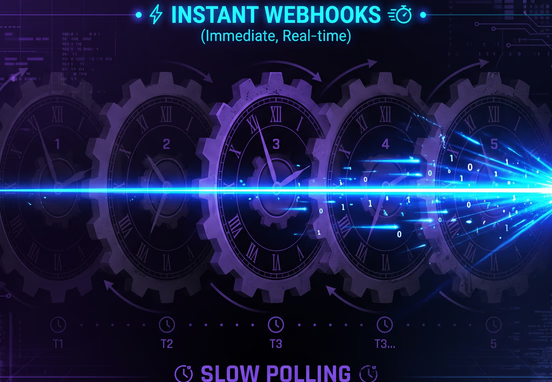
Eradicating Latency via Webhooks Over Periodic Polling
Many legacy systems check for stock updates using automated cron jobs that query the server at scheduled intervals, an engineering method known as periodic polling. Polling creates an inherent operational delay equal to the duration of the sleep interval, meaning a fifteen-minute polling gap leaves a fifteen-minute window open for catastrophic double-selling events. Furthermore, polling wastes enormous server resources, as the platform forces hundreds of empty database requests when inventory levels remain completely static.
Bespoke web architectures eliminate this architectural overhead by utilizing event-driven protocols. To discover how these real-time transmission tools protect operational efficiency, businesses can review the ultimate guide to custom webhooks: speed, security, and why they outperform polling, which highlights how instant webhooks eliminate system lag. Instead of wasting processing power asking if an adjustment has occurred, the backend waits quietly until the physical inventory database pushes a specific change notification.
Building a sustainable infrastructure requires understanding how this transactional layout forms the baseline of your technical environment. Organizations can explore the mechanics behind these foundational systems in our deep dive on trigger-action logic: the foundation of sustainable web automations to better understand the relationship between physical updates and web actions.
Tip: Always pair your real-time webhook architecture with a low-priority, daily reconciliation script. While webhooks handle instantaneous, minute-by-minute inventory adjustments, a nightly automated audit ensures that any dropped connections or network interruptions are corrected, guaranteeing absolute alignment before the start of each business day.
Integrating Modern Web Layouts with Legacy Systems
A major obstacle when executing an enterprise-wide integration is dealing with outdated on-premise warehouse software. Many established brick-and-mortar operations run desktop-based ERP databases that lack native cloud APIs, modern webhook support, or standardized JSON data outputs. This technical gap frequently prevents out-of-the-box software packages from communicating with custom, modern web storefronts.
Overcoming this requires deploying custom middleware agents or secure reverse-ssh tunnels that act as a translation layer. This intermediary software constantly watches the underlying local database tables for change flags. The moment a transaction modifies an on-premise ledger table, the middleware securely intercepts the local data change, wraps the record into a clean, modern payload format, and securely transmits it to the online store over an encrypted network connection.
By building tailored data channels, enterprises can modernize their operational efficiency without spending millions of dollars replacing stable, functional back-office software. Engineering teams can review the step-by-step strategies for executing these setups in our specialized analysis on how to connect a modern website engine to legacy desktop software, ensuring long-term technical cohesion.

Mitigating Concurrency Risks and Race Conditions
When a product has extremely low stock levels and high consumer demand, a technical challenge known as a race condition occurs. If two online shoppers click the final purchase confirmation button at the exact same millisecond that a walk-in customer buys that same item at a physical register, standard databases can experience a concurrency failure, approving all three transactions simultaneously despite only having one physical item available.
Bypassing this problem requires implementing strict pessimistic locking mechanisms or virtual buffer controls within the web application database layer. Instead of waiting for a payment gateway confirmation to alter stock states, the website creates a temporary database reservation the moment an item is placed into an active checkout funnel.
| Synchronization Strategy | Processing Methodology | Concurrency Protection Level | Best Use-Case Scenario |
|---|---|---|---|
| Real-Time Pessimistic Locking | Locks the SKU row in the database at checkout initiation; rejects secondary purchases until the session clears. | Absolute protection against race conditions and database double-writes. | Limited-edition drops, luxury items, and high-demand, low-stock inventory profiles. |
| Dynamic Virtual Buffer Stock | Subtracts an automated safety percentage from visible web inventory based on physical sales velocity metrics. | Moderate protection; absorbs sudden operational data delays before overselling can occur. | High-volume fast-moving consumer goods with constant brick-and-mortar foot traffic. |
| Event-Driven Inventory Allocation | Queues incoming orders in a high-speed Redis message broker; processes allocation sequentially based on timestamp logs. | High protection; prevents database deadlocks by transforming parallel requests into serial rows. | Multi-channel global marketplaces experiencing massive concurrent traffic spikes. |
By tailoring the synchronization strategy to match specific sales volume profiles, companies can completely safeguard their operational workflows from database errors. This design guarantees that physical and digital assets remain perfectly aligned under every stress condition.

Optimizing Inbound Pipelines and Data Hygiene
Synchronizing inventory data isn't just about managing outbound notifications from warehouse floors; it also requires ensuring that incoming data files from suppliers, manual vendor inputs, and physical spreadsheets are structured cleanly before hitting the main application core. Messy import habits, inconsistent SKU patterns, and malformed files can easily corrupt database indices, leading to inventory mismatches across all channels.
Enterprises must enforce strict data hygiene principles at every entry point to prevent broken sync cycles. To avoid these common data corruptions, organizations should actively study the layout guides found in our report on 4 messy spreadsheet habits to eliminate for flawless online data imports. This review enables teams to build automated preprocessing scripts that clean, format, and validate inventory inputs before they can alter live production databases.
Implementing these sanitation processes ensures that the foundational data moving through your systems remains highly reliable. Businesses can gain a deeper perspective on how these unified databases support broad operational scaling by studying our analytical piece on how two-way data sync keeps websites and back-office systems aligned, establishing a secure loop across every physical and digital environment.
Deploying an Enterprise Inventory Synchronization System
Achieving flawless synchronization between physical warehouses and custom digital environments requires moving away from fragile, plugin-dependent middleware. True operational efficiency is achieved by deploying dedicated, custom-coded data pipelines engineered to handle high-concurrency event tracking, instant webhook delivery, and resilient error fallbacks.
Building these systems requires specialized engineering workflows that interface cleanly with both modern cloud structures and legacy enterprise frameworks. Eliminating transactional blind spots and protecting your retail margins requires a platform built specifically for your logistical reality.
To see how specialized development can revolutionize your logistics layout and protect your cross-channel sales data, explore our custom workflow and systems automation service to map out a resilient, high-speed architecture designed to scale your operational ecosystem.