

What Is an API? A Jargon-Free Guide to Web Integrations

Modern web applications do not operate in isolation. For a business to function efficiently, its website, customer relationship management software, inventory ledger, and billing systems must constantly trade data. An Application Programming Interface, universally abbreviated as an API, is the software intermediary that allows these completely distinct platforms to speak to one another automatically. It serves as a secure digital highway designed to transport structured information between systems, eliminating manual entry and silos.
To understand an API without technical confusion, consider it as a digital messenger or a translator. When you use an application on your phone to check hotel availability, that app does not have direct access to the hotel chain’s underlying database. Instead, the app formats a specific request and hands it to the hotel's API. The API travels to the database, extracts the relevant room rates, and delivers that data back to your app, which then renders it into a clean user interface.
The API acts as both a translator and a security guard. It ensures that the requesting application only accesses the exact data it is explicitly authorized to see, protecting the host system's core architecture from external vulnerability. By utilizing these structured data pipelines, organizations can seamlessly link front-end user experiences with complex back-office systems to create automated operational ecosystems.
The Anatomy of the Request-Response Cycle
Every communication handled by an API occurs within a strict structural framework known as the request-response cycle. This cycle always begins with the client application—such as your website's checkout form—issuing a targeted request to an external server. The server receives the payload, authenticates the identity of the client, executes the requested programmatic logic, and returns a structured response containing either the requested data or a confirmation of the action.
This interaction is completely synchronous and happens within milliseconds, allowing users to experience real-time updates across web applications. Because APIs rely on standardized web protocols, systems built on completely different programming languages can communicate flawlessly without requiring any underlying code modifications.
The operational breakdown of this cycle demonstrates how an API securely sits between your primary web interface and an isolated external database:
[Client Application]
         │
         │  1. Formulates JSON Request Payload
         ▼
[API Gateway Endpoint] ──> 2. Validates Security Keys & Permissions
         │
         │  3. Forwards Sanitized Query
         ▼
[Internal Database]
         │
         │  4. Extracts Specific Records
         ▼
[API Gateway Endpoint] ──> 5. Packages Data into Structured Response
         │
         │  6. Delivers Standardized JSON
         ▼
[Client Application]
Understanding Endpoints and Payloads
An endpoint is a specific web address or URL exposed by an API provider where external applications send requests to interact with a particular data resource. For example, a CRM software provider might expose an endpoint dedicated entirely to generating new customer profiles. Sending a payload to that specific URL tells the receiving application exactly which database table needs to be targeted and updated.
The payload is the actual data package sent within the request, typically written in a lightweight, human-readable data format called JSON (JavaScript Object Notation). This format uses simple key-value pairs to organize information cleanly. A standard contact form payload contains clear labels paired with user inputs, ensuring the receiving system can instantly parse and categorize the incoming data without processing delays.
The Core HTTP Methods of Web Integration
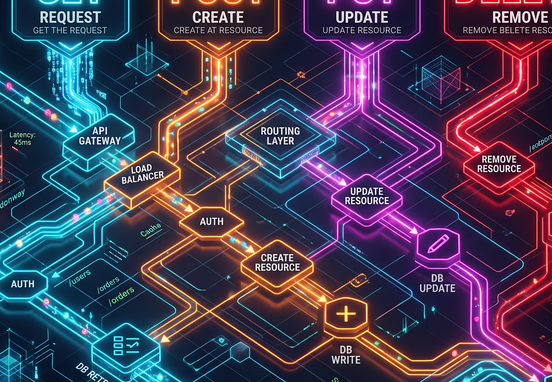
APIs utilize standard web communication rules called HTTP methods to define the exact nature of an operation being performed on a database resource. These methods function as universal verbs that tell the receiving server whether the client application is trying to view information, insert a new record, update an existing file, or delete outdated data.
By adhering to these predictable verbs, developers can quickly map out integrations between completely separate enterprise systems. Understanding these primary methods allows business operations teams to visualize how data flows during automation cycles.
| HTTP Method | Core Function | Real-World Enterprise Example |
|---|---|---|
| GET | Retrieves existing data from a server without modifying anything. | Pulla an active product inventory count to display on an e-commerce storefront. |
| POST | Sends new data to a server to create a brand-new database record. | Submitting a web lead form to automatically generate a contact card in a CRM. |
| PUT / PATCH | Updates an existing database record with new information. | Modifying a customer's shipping address within a portal after an order is placed. |
| DELETE | Permanently removes a specific record from the external server. | Purging a canceled user account from an active software subscription ledger. |
Every time an API completes one of these operations, it returns an explicit three-digit HTTP status code indicating the exact result of the request. A code in the 200 range signifies absolute success, codes in the 400 range point to client-side errors like missing authentication keys, and codes in the 500 range indicate that the receiving server encountered an internal system failure.
Why Custom Web Architecture Demands Direct APIs
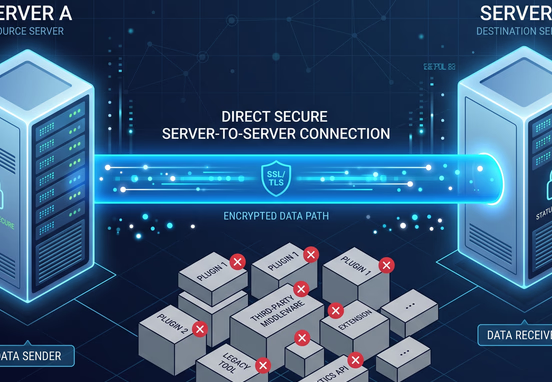
While pre-built automation plugins and visual integration tools allow basic applications to link together, growing enterprises quickly hit operational bottlenecks when relying on third-party middleware. These intermediate software platforms overlay restrictive usage caps, introduce unnecessary network latency, and charge arbitrary per-action fees that scale aggressively alongside your transaction volume.
Building direct API connections allows an enterprise to bypass these artificial constraints completely. Direct programmatic integrations give your development team absolute control over how data is processed, cached, and stored. This ensures your systems run at maximum speed while heavily reducing third-party software dependencies.
Operational Strategy
When designing your web platform, always prioritize direct API connections over third-party plugin wrappers. Direct integrations eliminate middleman software fees, lower system latency, and insulate your business from sudden vendor price hikes or unexpected platform outages.
Taking control of your application infrastructure requires engineering clean, direct connections between your website's underlying code and your core operational software. When you choose to connect a core code base to CRMs and automation software, you remove fragile middleware layers, establish long-term system stability, and unlock advanced data routing features that visual builders cannot replicate.
Furthermore, setting up direct programmatic communication channels ensures that your automated workflows are built on a sustainable structural foundation. Designing your software around native data flows allows you to leverage robust trigger-action logic to handle complex business processes, validate form inputs automatically, and trigger multi-system updates instantly.
The Operational Switch: APIs vs. Custom Webhooks
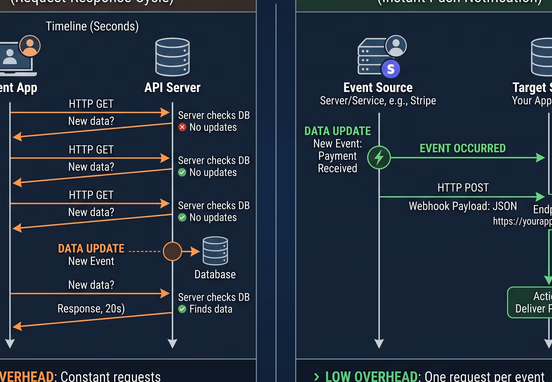
As web networks grow more complex, understanding the difference between standard API requests and webhooks becomes essential for maintaining peak performance. A traditional API connection operates on an approach known as polling. This means your website must constantly send automated requests to an external server at regular intervals just to check if any new information has been modified or added.
Polling consumes significant server resources and network bandwidth, as the vast majority of these automated checks return zero new data. Webhooks reverse this communication model completely by introducing an event-driven framework. Instead of your server asking for updates continuously, the external platform waits until a specific event occurs and instantly pushes that data package directly to your application backend.
This operational shift eliminates wasteful server cycles, speeds up internal data transmission, and ensures that your business automation steps trigger the exact millisecond a customer takes action. Integrating event-driven architectures like custom webhooks provides your digital ecosystem with low-latency communication that scales smoothly without driving up hosting overheads.
Protecting Corporate Data Ownership Through API Security
Exposing data pathways to link separate platforms requires rigorous security architecture to protect corporate intelligence and customer data. APIs protect these communication channels by utilizing advanced authentication protocols such as secure API keys, bearer tokens, and OAuth frameworks. These digital credentials function like highly encrypted corporate entry badges, ensuring that only verified application requests are allowed to cross your system boundaries.
Relying on generic third-party data aggregators means passing sensitive company records through an external vendor's database infrastructure. This structural layout poses substantial data compliance risks, especially for enterprises navigating strict global privacy regulations like GDPR, CCPA, or HIPAA.
Building custom API channels guarantees that your business retains absolute sovereignty over its transactional ledgers and client profiles. Investing in independent pipelines and reviewing why custom api pipelines guarantee data ownership (and the critical features to look for) allows your enterprise to insulate its core assets from platform vulnerabilities while maintaining flawless operational compliance.
Elevating Enterprise Efficiency with Modern Web Integrations
Transitioning away from fragmented manual workflows and fragile plugin integrations requires a deliberate shift toward structured API architecture. By deploying direct, customized web integrations, your organization can break down data silos, reduce operational overhead, and ensure your software tools function as a single, cohesive engine.
Designing, securing, and maintaining these advanced data networks demands precise software engineering and deep system mapping. Utilizing professional custom workflow and systems automation services enables your business to build secure, direct-to-gateway API pipelines that streamline operations, secure your data assets, and drive long-term digital growth.