

The Hidden Dangers of Letting a Relative Build Your Business Site

Every business owner looks for ways to optimize operational expenses during the launch or growth phase. When a tech-savvy relative offers to build your company website for free or at a steep discount, it looks like an undeniable win. You save critical startup capital, support a family member's portfolio development, and get your digital storefront up and running simultaneously.
Unfortunately, this choice is one of the most common strategic traps in small-business operations. What begins as an innocent, money-saving favor frequently transforms into a logistical nightmare that stalls commercial growth, threatens asset ownership, and fractures family dynamics. A business website is not a casual digital hobby project; it is your primary engine for customer acquisition, brand validation, and revenue generation. Treating it as an informal favor introduces severe structural vulnerabilities that cost far more to fix down the line than hiring a professional agency from day one.
When you mix personal relationships with business infrastructure, you lose the ability to enforce professional standards. This dynamic introduces a lack of accountability, technical deficiencies, and long-term liabilities that can actively sabotage your business positioning. Understanding these hidden dangers is essential for protecting both your company's digital equity and your family relationships.
The Core Conflict: Hobbyist Execution vs. Commercial Architecture
Family members who build websites as a hobby or as an entry-level freelance gig generally rely on visual page builders or out-of-the-box templates. They prioritize aesthetic convenience over performance optimization, conversion psychology, and search engine technical requirements. This approach creates an immediate divergence between what a business needs to rank and what a hobbyist knows how to deploy.
Commercial websites require clean, lightweight, semantic code to rank competitively on modern search algorithms. When an amateur relies heavily on bloated drag-and-drop themes, they inadvertently compromise the entire technical foundation of your site. This decision has direct, measurable consequences on your brand's digital presence and operational stability.
Structural Vulnerabilities of Amateur Development
Amateur setups consistently suffer from unoptimized assets, excessive database queries, and redundant plugin dependencies. These issues are not just backend inconveniences; they directly harm your bottom line by increasing user bounce rates. If a site takes longer than three seconds to load, a significant percentage of mobile traffic abandons the session before ever interacting with your brand.
Professional web design and development services solve this issue by prioritizing lean architecture from the initial phase of development. They ensure that your site structure is built to scale smoothly as your traffic increases. An amateur, by contrast, rarely understands how to build infrastructure capable of handling high concurrent user volumes or complex integrations.
Analyzing the Operational Gap
Let us break down the operational differences between leveraging professional engineering and relying on a well-meaning family member. The disparities span across project management, code quality, governance, and technical execution.
| Operational Variable | Professional Development Agency | Relative or Family Hobbyist |
|---|---|---|
| Project Timeline | Strict milestones governed by a legally binding contract | Casual schedule subject to personal life disruptions |
| Code Architecture | Clean, semantic, hand-coded frameworks optimized for speed | Bloated templates or visual builders with heavy plugins |
| Data & Asset Ownership | Full transfer of domain, hosting, and source code ownership | Fragmented credentials tied to personal email accounts |
| Technical Support | Dedicated service-level agreements (SLA) for maintenance | Sporadic availability based on free time or goodwill |
| Legal Compliance | Implementation of strict data privacy and accessibility standards | Overlooked legal baselines, exposing the business to risk |
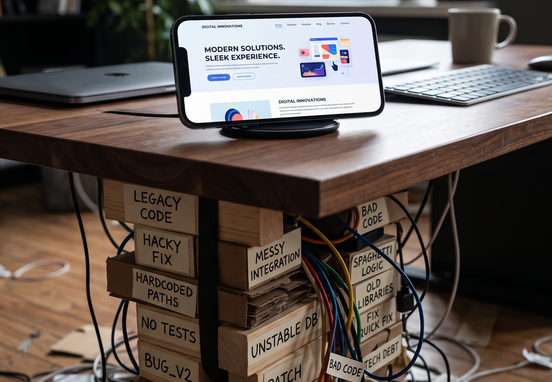
The Illusion of Cost Savings and Technical Debt
The primary justification for using a relative is saving money. However, this perspective ignores the reality of technical debt. Technical debt refers to the future cost of reworking a poorly constructed digital asset. When a relative builds a site using sub-optimal methods, the business accrues debt with every line of inefficient code or unoptimized plugin integration.
Eventually, the limitations of that amateur build will block necessary business expansions. Whether you need to integrate a custom CRM, deploy automated booking features, or optimize for localized search, an amateur framework will inevitably push your system to its breaking point. At that stage, you must pay a professional team to completely scrap the existing site and rebuild it from scratch.
This reality completely erases any initial savings. When calculating your actual investment, you must include the lost revenue from poor conversion rates, the hours spent managing communication issues, and the ultimate cost of a complete professional rebuild. Understanding how to budget for a business website without getting ripped off involves looking at the long-term total cost of ownership rather than short-term price cuts.
The Compounding Costs of Visual Page Builders
Many well-meaning relatives build business sites using standard WordPress themes, Squarespace, or Wix setups. While these platforms allow non-developers to assemble pages quickly, they are notoriously inefficient for scaling businesses. The backend of a template-driven site is often cluttered with unnecessary scripts that slow down server response times.
To achieve peak efficiency, a business requires a clean, hand-coded web architecture that eliminates the unnecessary overhead found in consumer-grade builders. Without this foundation, your site will struggle to compete in competitive industries where search engine visibility is tied directly to performance metrics.
To illustrate why amateur page-builder implementations degrade your technical health, we can look at how a professional structures an element versus how a visual page builder handles it. A professional writes a clean, accessible HTML layout:
┌────────────────────────────────────────────────────────┐
│                 Header: .site-header                   │
└───────────────────────────┬────────────────────────────┘
                            │
            ┌───────────────┴───────────────┐
            ▼                               ▼
┌───────────────────────┐       ┌───────────────────────┐
│          h1           │       │           p           │
│  "Empowering Corp..." │       │  "High-performance..."│
└───────────────────────┘       └───────────────────────┘
Conversely, an amateur page builder typically wraps that identical element in dozens of redundant, nested formatting divs:
┌────────────────────────────────────────────────────────┐
│             div: .elementor-element                    │
└───────────────────────────┬────────────────────────────┘
                            ▼
┌────────────────────────────────────────────────────────┐
│             div: .elementor-widget-container           │
└───────────────────────────┬────────────────────────────┘
                            ▼
┌────────────────────────────────────────────────────────┐
│             div: .elementor-text-editor                │
└───────────────────────────┬────────────────────────────┘
                            ▼
┌────────────────────────────────────────────────────────┐
│             div: .inner-wrap-992                       │
└───────────────────────────┬────────────────────────────┘
                            │
            ┌───────────────┴───────────────┐
            ▼                               ▼
┌───────────────────────┐       ┌───────────────────────┐
│h1: .heading-style-... │       │ p: .sub-text-override │
│  "Empowering Corp..." │       │  "High-performance..."│
└───────────────────────┘       └───────────────────────┘
This excessive nesting creates massive code bloat, forces search engines to crawl through junk markup, and drastically slows down rendering times on lower-powered mobile devices.
Choosing an amateur implementation means sacrificing the deep optimizations required to turn visitors into paying customers. The financial implications are massive when compared to a strategic, professional execution. To understand the wider financial scope of this choice, consider the hidden costs of DIY page builders which share identical structural flaws with relative-built projects.

The Breakdown of an Informal Project Timeline
Without a binding commercial contract, a business website project quickly becomes a low-priority task for a relative. When real client work, school assignments, or personal issues arise, your business site gets pushed to the back burner. This dynamic creates a predictable timeline of operational delays.
- The Enthusiasm Phase (Weeks 1-2): Wireframes are discussed casually over family dinners, and basic design ideas are shared. Progress seems rapid because the visual shell is easy to assemble.
- The Stagnation Phase (Weeks 3-6): The relative encounters a technical hurdle, such as payment gateway integrations or custom responsive layouts. Progress slows to a crawl as their primary employment or personal life takes priority.
- The Communication Breakdown (Weeks 7-10): You hesitate to push for updates because you do not want to cause tension at family gatherings. The relative avoids your calls or messages because they feel guilty about the lack of progress.
- The Realization Phase (Week 11 and beyond): The site remains half-finished, non-functional, and your business launch timeline is completely derailed. You are left with an unusable product and a strained personal relationship.
Asset Ownership and Communication Vulnerabilities
One of the most dangerous risks of letting a relative handle your web engineering involves asset ownership. Professional deployments ensure that all domains, hosting environments, SSL certificates, and third-party APIs are registered under the business's legal entity. With a relative, these configurations are frequently executed haphazardly.
They might register your domain name through their personal registrar account or hook your hosting up to a shared server they use for multiple personal hobbies. This setup creates a massive governance risk for your enterprise. If you do not legally own the accounts where your site lives, you do not own your website.
Account Locking and Governance Chaos
If your relationship with that relative sours, or if they simply become unresponsive due to life changes, your business can lose access to its digital property. Regaining control of a domain name that is legally registered to someone else's personal identity is an arduous, often impossible legal process. It can result in complete digital displacement for your brand.
Critical Operational Tip: Always maintain absolute governance over your digital infrastructure. Never allow anyone—whether a relative, a freelancer, or an internal employee—to register corporate assets under personal accounts. All domains, hosting plans, analytics properties, and security certificates must be secured using a dedicated corporate email identity controlled exclusively by the business owners.
This operational neglect extends into critical digital safety components. Amateur builds frequently omit essential data security protocols, leaving your backend open to automated bot attacks, database breaches, and standard configuration errors. Founders must grasp the absolute necessity of securing their digital storefront properly, as explained in our guide on cyber security infrastructure basics for founders.

Overlooked Legal and Compliance Risks
Modern business websites must comply with strict state, national, and international regulations. Amateur developers are rarely versed in these legal nuances, exposing your enterprise to severe compliance penalties and litigation risks.
For instance, most commercial sites need clear terms of service, consumer data privacy policies, and accessibility accommodations. Failing to implement these assets leaves your organization highly vulnerable to predatory lawsuits and regulatory audits.
Missing Legal Protections in Amateur Builds
When a family member builds a site, they rarely implement the necessary backend frameworks to enforce data privacy compliance. This oversight can lead to severe fines if your business handles consumer data from regions with strict privacy mandates.
- Privacy Policy Deficiencies: Lack of automated cookie consent mechanisms or transparent data handling disclaimers that match modern regulatory frameworks.
- Accessibility Non-Compliance: Disregarding clean semantic HTML patterns, which makes the site unusable for screen readers and violates digital accessibility acts.
- Missing Terms of Service: Failing to post clear liability limitations regarding your website's informational output, shipping policies, or e-commerce transactions.
Every digital storefront must proactively mitigate these liabilities. You cannot afford to skip the 4 legal documents every business website must display simply because your developer was working as an unpaid volunteer or a casual freelancer.
Preserving the Relationship by Establishing Professional Boundaries
Declining a relative’s offer to build your website does not have to cause an argument. In fact, keeping business out of family affairs is the single best way to protect that relationship from long-term strain. When business goals clash with familial expectations, the emotional fallout can last for years.
You can easily reframe the conversation by explaining that your business requires strict contractual obligations, technical insurance, and specific performance metrics that would place an unfair burden on a family member. By positioning your choice as a matter of professional liability and corporate governance, you eliminate the emotional weight of the refusal.
Investing in your digital presence from the start ensures your platform is secure, fast, and scalable. Handing your web development to an expert agency guarantees your corporate asset is built to generate measurable revenue, allowing your personal relationships to remain entirely conflict-free.