

How to Budget for a Business Website Without Getting Ripped Off

Procuring a website for an expanding enterprise is notoriously difficult to price accurately. Quote ranges vary wildly from a few hundred dollars to tens of thousands of dollars for seemingly identical requirements. This massive pricing disparity exists because the web development market lacks standard regulatory pricing metrics. Agencies and freelancers structure their bills based on disparate operational standards, tech stacks, and overhead costs.
Many business owners fall into the trap of choosing either the cheapest option or the most inflated corporate package. The lowest quote often carries massive hidden technical debts that kill growth later on. Conversely, an excessively high quote frequently covers unnecessary agency overhead rather than high-performance digital engineering. To build an accurate budget, you must learn to audit a digital agency's scoping brief with the precision of a seasoned procurement officer.
When you manage your development budget strategically, you protect your company from predatory contract markups. This direct approach helps you identify low-value fees while ensuring your capital is allocated to high-performance infrastructure. Understanding the real mechanics of web budgeting allows your business to secure a premium digital asset that scales smoothly alongside your customer acquisition goals.
Deconstructing the Web Development Pricing Spectrum
To navigate web development proposals successfully, you must break down the market into distinct service tiers. Each tier offers specific trade-offs regarding reliability, long-term scalability, data governance, and strategic execution.
Low-Tier Assets (Overseas Freelancers and Template Resellers)
This tier typically charges low upfront costs but comes with massive operational hazards. Providers here often rely on generic, pre-made themes or visual platforms, modifying text and logos without optimizing underlying architecture. Communication barriers, misaligned time zones, and zero long-term maintenance infrastructure are common characteristics. This setup is highly prone to hidden complications, a reality explored when businesses face the hidden dangers of letting a relative build your business site.
Mid-Tier Assets (Boutique Firms and Independent Specialized Engineers)
This tier represents the baseline for serious commercial operations. Independent specialists write clean, custom code or deploy highly optimized Content Management Systems tailored to business goals. They understand search engine technical optimization, wireframing, and user acquisition pipelines. Timelines are clearly defined through binding service contracts.
Enterprise-Tier Assets (Full-Service Performance Agencies)
This upper tier provides complete strategic integration. These agencies do not merely build pages; they integrate web applications directly into your internal databases, enterprise CRMs, and supply-chain infrastructure. They employ dedicated interface designers, backend engineers, specialized SEO copywriters, and security architects.

Line-Item Analysis: High-Value Investments vs. Artificial Markups
When reviewing a formal web proposal, you must separate high-value engineering line items from inflated administrative fees. This transparency helps you spot padded contracts instantly.
| Development Component | Operational Classification | Value Assessment & Vendor Alternative Risk |
|---|---|---|
| Bespoke Wireframing & UX Design | High-Value Critical Asset | Essential for layout optimization and user engagement. Skipping this leads to generic, low-converting layouts. |
| Custom Core Frontend Engineering | High-Value Critical Asset | Direct writing of optimized semantic code. Eliminates dependency on heavy, slow visual builders. |
| Account Management & Strategy Meetings | Frequent Agency Inflation Line | Necessary for complex deployments, but often padded with excessive hours to inflate project scope. |
| Proprietary CMS Licensing Fees | High-Value Risk Factor | Third-party platforms that lock your data into subscription models, driving up long-term operational costs. |
| Technical SEO Architecture Setup | High-Value Critical Asset | Proper configuration of internal schemas, crawl maps, and semantic code hierarchies for visibility. |
How Technical Architecture Mandates Your Long-Term Overhead
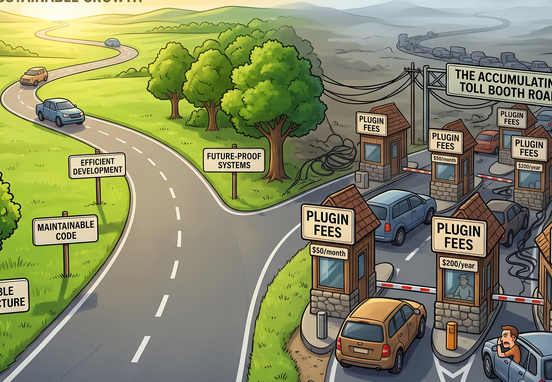
The foundational code stack you select impacts your running budget for years to come. Choosing entry-level content tools creates an ongoing cycle of subscription fees and maintenance costs. Many organizations fail to realize that opting for cheap software setups triggers an unsustainable hidden cost of DIY platforms and templates that locks growing businesses into perpetual upgrades. When analyzing the long-term trade-offs of a bespoke digital asset versus mass-market alternatives like GoDaddy or Hostinger, the true business costs of relying on rigid, low-cost builders become painfully clear.
The Page Builder Maintenance Tax
When an agency builds your digital hub using consumer-tier visual editors, they introduce ongoing dependency risks. You must pay continuous licensing fees for visual modules, database managers, and security extensions. Over time, these third-party integrations conflict with core software updates, leading to sudden site failures that require expensive emergency development hours to resolve.
The Clean Code Financial Advantage
Investing upfront in professional web design and development services that prioritize clean, hand-coded source files removes this ongoing software overhead. Custom architecture executes directly on the server without needing heavy plugin wrappers or subscription platforms. This lean construction model drastically cuts your server resource costs and eliminates unexpected plugin breakage fees. Selecting a clean, hand-coded web architecture over page builders ensures your digital property functions smoothly without ongoing software conflicts.
To see how budget deployment shapes the long-term cost profile of your web infrastructure, review this comparative capital trajectory:
┌───────────────────────────┐          ┌───────────────────────────┐
│  TEMPLATE BUILD STRATEGY  │          │    CUSTOM CODE STRATEGY   │
└─────────────┬─────────────┘          └─────────────┬─────────────┘
              │                                      │
              ▼                                      ▼
     Low Initial Outlay                  Strategic Outlay
              │                                      │
              ▼                                      ▼
      High Plugin Fees                        Zero Plugin Fees
              │                                      │
              ▼                                      ▼
      Heavy Maintenance                      Low Server Cost
              │                                      │
              ▼                                      ▼
   Rebuild Needed (Year 2)                Scalable Asset (Year 5+)

Red Flags to Identify Predatory Scoping Tactics
Protecting your budget requires recognizing specific warning signs during the exploratory consultation phase. Agencies that use vague language or complex industry terminology often do so to obscure inflated margins or hidden upgrade charges.
- Vague Maintenance Requirements: A proposal that demands high monthly fees for basic tasks like application updates without providing an explicit service level agreement (SLA) is a major red flag.
- Hostage Infrastructure Architecture: Beware of service providers who insist on hosting your completed application exclusively on their proprietary internal servers. This setup prevents you from migrating your property to standard hosting platforms, giving the agency complete control over your business asset.
- Absence of Data Sovereignty Guarantees: Ensure the contract explicitly states that your business retains absolute legal ownership of all source code, graphic assets, database records, and domain paths upon final invoice settlement.
- Uncapped Hourly Scoping Rules: Agreements that lack a fixed overall project price and instead rely on fluid hourly estimates often lead to massive budget overruns during standard implementation phases.
The Strategic Shift: Shifting from Tech Expense to Corporate Asset
To avoid being overcharged, your executive team must shift how it views website capitalization. A high-performance commercial website is not a simple utility cost like office electricity or internet access; it is an appreciating revenue engine designed to lower your client acquisition costs and extend your customer lifecycle.
Companies that choose underpowered setups to save money often end up losing market share to competitors who invest in robust digital infrastructure. Understanding how lacking a professional website funds your competitors is essential for realizing that a cheap, broken user experience acts as a direct subsidy to your industry rivals.
Maximizing the Value of Digital Equity
When a digital asset is built correctly using clean, optimized semantic principles, it begins generating organic customer leads continuously. This long-term inbound traffic flow dramatically reduces your dependence on expensive paid search and social ads. Evaluating your web budget through a thorough website ROI framework transforms your initial development cost into a strategic investment that maximizes overall customer lifetime value.
Complete Scoping Checklist for Accurate Vendor Quoting
To ensure you receive accurate, comparable proposals from professional agencies, you must present them with an explicit, standardized project brief. Providing exact criteria prevents vendors from adding padded contingency fees to account for vague project details.
- Core Systems Integrations: List all internal software, such as CRMs, inventory managers, email systems, and customer booking portals, that your site must link with natively.
- Performance Benchmarks: Mandate that the finished site must hit exact performance targets, such as a minimum 90+ mobile score on standard page diagnostic tools.
- Responsive Screen Parameters: Require full cross-device testing across all major smartphone, tablet, desktop, and modern television screen widths to prevent broken mobile experiences.
- Legal Compliance Baselines: Demand native inclusion of automated data privacy cookie panels, accessible semantic structures, and dedicated legal documentation regions.
Procurement Security Standard: Never distribute a project request without defining your data accessibility requirements. Demand that all bidders document their delivery workflow, including direct access to repositories, server environments, and master registration paths. This step guarantees your operational leadership retains full control over the project throughout the development cycle.
Securing expert engineering ensures your site remains adaptable, performant, and perfectly tailored to your internal sales pipelines. By deploying specialized, performance-first assets, your company builds a resilient, highly optimized digital presence. This disciplined strategy eliminates unexpected technical fees and ensures your capital drives sustainable, long-term market growth.