

The Hands-Free Goodbye: How to Automate Your Client Offboarding Process

Client offboarding is frequently treated as an afterthought in agency and enterprise environments. When a contract concludes or a project reaches its natural lifecycle end, internal focus shifts completely toward active accounts or incoming pipeline leads. This operational neglect introduces massive security vulnerabilities, data leaks, and ongoing administrative expenses that directly erode an agency’s net margins. Leaving client accounts active across internal communication channels, staging environments, and premium software platforms creates a disorganized web infrastructure that compromises enterprise security.
Manual offboarding relies heavily on human checklists, which are inherently prone to operational errors. A project manager might forget to remove an external user from a shared Slack channel, or a developer might leave a legacy staging database active on a premium cloud hosting server. Over time, these unrevoked permissions accumulate into shadow IT vectors and abandoned server allocations that continuously siphon financial resources from the business. Automating this terminal phase of the client lifecycle ensures that every account closure occurs with absolute precision, protecting both your internal systems and your former client’s corporate data.
Replacing manual checklists with deterministic automation logic changes the relationship wrap-up from a disorganized administrative scramble into a clean, automated event. By linking billing states, project management milestones, and identity access protocols into a single automated pipeline, organizations can ensure that data preservation and access removal happen instantly. This article outlines the architectural patterns needed to deploy an automated offboarding pipeline that protects your infrastructure, optimizes server costs, and delivers a professional final experience to your departing clients.
The Architecture of an Automated Offboarding Trigger
A reliable offboarding workflow must be deterministic, initiating automatically from a verified state change in your central billing engine or customer relationship management platform. Relying on manual slack messages to notify teams of an account termination introduces latency and human error. Instead, the workflow should execute the moment a subscription is marked as canceled or a project contract reaches its explicit calendar expiration timestamp.
When this event occurs in your billing pipeline (such as a canceled subscription status in your merchant portal or an ended contract flag in a custom CRM), an outbound webhook fires a structured payload to your primary automation orchestrator. This payload must carry the necessary account identifiers, termination reasons, and active system scopes required by the downstream cleanup scripts. By centralizing this event capture, your agency ensures that offboarding tasks occur instantly, eliminating the grace period where ex-clients might retain unauthorized platform access.
[ Billing Engine / CRM State Change ]
              │
              ▼
   [ Outbound Webhook Fired ]
              │
              ▼
   [ Ingest JSON Payload ]
              │
    ┌─────────┴─────────┐
    ▼                   ▼
[ Parse Identifiers ] [ Identify Scopes ]
- Account ID          - Google Drive
- Sub Tier            - Slack Channel
- Termination Type    - Portal Users
    └─────────┬─────────┘
              ▼
   [ Microservice Router ]
This payload acts as the architectural blueprint for the cleanup process. Once parsed by your custom systems engine, it triggers a series of decoupled microservices designed to dismantle access, archive internal files, and clean out active database footprints.
System Access Revocation and Security Scoping
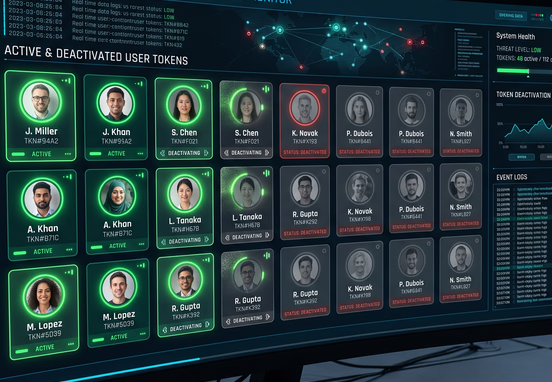
The primary operational risk during account termination is lingering user access. If a former client retains access to internal production pipelines, shared repositories, or communication workspaces, your agency faces significant security liabilities. Manually cross-checking and removing user permissions across a modern tech stack can take a project manager hours per client.
To handle this systematically, your automation hub can utilize direct API integrations to instantly revoke authorization tokens and disable external identities. For example, the system can hit specific Slack API endpoints to remove external guest users, deactivate custom portal credentials, and archive associated client collaboration spaces simultaneously. This rigorous, immediate cleanup mirrors the best practices used in automated HR workflows to onboard new hires and revoke app access upon exit, ensuring that client exit security is handled with the exact same level of scrutiny as internal employee departures.
Structural Access Deactivation Nodes
- Database Record Deactivation: The system sends a POST request to your custom web portal backend to set the
is_activestatus of all client-linked users to false. - Identity Management Sync: Third-party OAuth tokens and single sign-on (SSO) links are immediately invalidated, cutting off access to shared internal whiteboards and development dashboards.
- Communication Isolation: Shared channels or project management spaces are archived through automated script paths, preserving the historical text while restricting new entries or reads.

Data Preservation, Archival, and Infrastructure Cleanup
An effective offboarding protocol does not simply erase history; it packages and stores assets securely. Leaving legacy development databases, asset folders, and unused code repositories active across your cloud ecosystem creates digital clutter. This clutter drives up infrastructure costs and complicates your internal systems maintenance.
Before deleting development assets or staging sites, your system must execute an automated final synchronization. This process bundles all client-produced deliverables, design sheets, and technical system documents into a read-only, encrypted zip file. This package is then moved to cold storage, ensuring you maintain a complete historical record for legal compliance and future reference without paying premium live-hosting fees.
Managing this dynamic archival loop is essential for maintaining efficient long-term storage configurations. Utilizing the lean database principles that prevent storage overages allows your agency to clear production space safely, offloading large assets to low-cost archival layers while maintaining clean application runtimes.
     [ executeDataArchival() ]
                 │
                 ▼
     [ Compress Source Folder ]
                 │
                 ▼
    [ Move to Cold Storage Tier ]
                 │
                 ▼
    [ Update DB Storage Status ]
                 │
         ┌───────┴───────┐
         ▼ Success       ▼ Error
   [ Log Success ]  [ Log Error Exception ]
                         │
                         ▼
                    [ Trigger Fallback ]
To ensure complete data security during this final data transition, your background runners should verify that a successful backup has occurred before any local deletions take place. Integrating this step with your broader operational code ensures you can safely and automatically back up business data and system logs every night, giving your operations team a reliable safety net if an archival script encounters an unexpected interruption or runtime exception.
Automated Exit Deliverables and Client Feedback Capture
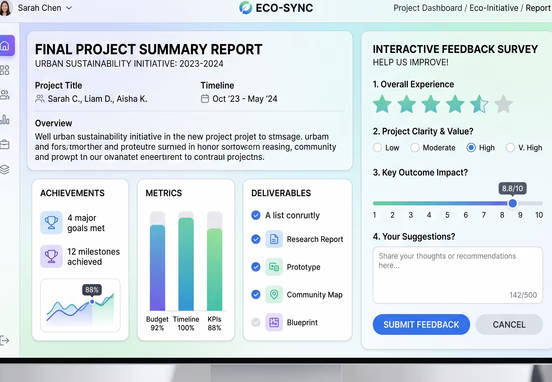
The final touchpoint of a professional client relationship should be smooth and transparent. Once the technical infrastructure has been cleaned and secured, the system should automatically compile an exit package for the departing client. This package provides them with clear documentation of their transition, including links to their exported assets, copies of past invoices, and instructions for reclaiming any external domains.
This automated transmission provides the client with a professional, frictionless experience while simultaneously gathering valuable exit data for your agency. As part of this outbound sequence, the system can deliver a dynamic offboarding survey to gather structural feedback. This step helps identify any hidden friction points that occurred during the project lifecycle.
Capturing this operational insight complements your early-stage retention programs. By reviewing these terminal metrics alongside data from your automated client retention workflows, leadership teams can spot systemic delivery problems, refine client management practices, and continuously optimize the overall service model.
The Complete Client Offboarding Automation Matrix
To implement these automated workflows successfully, your operations team must map out every step of the offboarding lifecycle against explicit system events, API triggers, and verification windows.
| Workflow Phase | Technical Operational Trigger | Associated API Endpoint / Service | Target Execution Window |
|---|---|---|---|
| Core Event Ingestion | Subscription Canceled / Contract Expired | Outbound Webhook Handler | Real-Time (Immediate) |
| Identity Revocation | Custom DB Flag Update & OAuth Revoke | /api/v1/auth/deactivate-user | 5 Minutes post-trigger |
| Communication Cleanup | Slack Conversation Archive / User Kick | conversations.archive (Slack API) | 15 Minutes post-trigger |
| Deliverable Compilation | Staging Export & Media Compression | Cloud Storage Archival Microservice | 1 Hour post-trigger |
| Infrastructure Takedown | Deletion of Staging Server / Sandbox | AWS / DigitalOcean Instance API | 24 Hours post-trigger |
| Exit Packet Delivery | Automated Transactional Email Dispatch | Mandrill / SendGrid API Engine | 48 Hours post-trigger |
Hardening Your Automation Against Offboarding Exceptions
Not every client exit follows a standard path. Some departures involve complicated asset transfers, while others require immediate access adjustments due to payment defaults. Your workflow logic must be flexible enough to handle these operational edge cases without requiring you to completely dismantle your automation framework.
To handle these scenarios, your system should support conditional routing flags directly within your primary offboarding script. For instance, if an account is flagged for non-payment, the system can skip the standard friendly exit survey and immediately focus on revoking platform access, locking staging instances, and pausing active deliverables. This level of precise programmatic control ensures your agency remains agile, secure, and fully protected against financial liabilities.
Managing Extended Contract Offboarding Extensions
- Grace Period Verification: The system checks the database for any pending contract extensions or secondary negotiations before revoking production tokens.
- Delayed Deletion Queues: Rather than executing destructive deletions instantly, staging environments are put into a suspended state for 14 days inside an automated cron queue.
- Manual Override Hooks: Administrators can flag an account status as "On Hold" via the central workspace portal to freeze all automated teardowns instantly if a renewal conversation reopens.
Tip: Always include an internal "Hold" override switch within your automated offboarding platform. If a client decides to renew their contract at the last minute or enters an extended transition negotiation, an account manager must be able to click a single button to pause the automated offboarding countdown, preventing accidental data deletion or automated user lockout.
Transitioning to a hands-free offboarding framework requires an investment in secure backend development and unified system integrations. For growing digital agencies and service providers, building custom internal automation pathways provides the scalability needed to handle high account turnover without placing an ongoing burden on your operational teams. By standardizing your offboarding process through a dedicated workflow and systems automation service, your agency can eliminate security blind spots, reduce software overages, and maintain an organized, audit-ready cloud infrastructure at every stage of the business lifecycle.
Establishing these automated workflows eliminates the human friction often tied to the end of a business relationship. Instead of manually searching through old dashboards, tracking access points, and wasting development hours on manual asset transfers, your business systems handle the work in the background. This clean approach ensures your team stays completely focused on active client growth while your technical landscape remains lean, secure, and scalable.