

How to Protect Cash Flow and Prevent Transaction Errors with Custom Billing Logic

Every digital business relies on its transaction pipeline as its absolute lifeline. Yet, generic out-of-the-box ecommerce software plugins frequently treat transaction workflows as a secondary concern. This oversight exposes high-volume platforms to a steady drip of silent revenue leaks, race conditions, double charges, and broken webhooks.
When a standard payment application processing millions of dollars experiences even a minor server timeout, a customer might click a purchase button twice. Without a tailor-made transaction guard, this single action can result in multiple charges or disjointed warehouse fulfillment requests. These recurring system inconsistencies degrade the user experience, inflate merchant chargeback ratios, and quickly destroy monthly operational cash flow.
Relying on off-the-shelf billing extensions creates systemic software rigidity that restricts an enterprise's growth strategy. Standard plugins struggle to natively execute complex commercial payment schedules, automated multi-party splits, or real-time variable pricing. Deploying a tailored workflow and systems automation service ensures your digital transaction network runs on clean, deterministic logic designed to protect every dollar entering the business ecosystem.
The Financial Risks of Off-the-Shelf Billing Middleware
Standard commercial billing plugins function by injecting generalized code packages into your website architecture. Because these programs are engineered to accommodate millions of completely different businesses, their backend databases are heavily bloated. This bloat introduces transactional latency and limits your ability to intercept a payment payload before it is submitted to a processing gateway.
When transactional data experiences processing lags, the risk of multi-charge anomalies skyrockets. If a database remains locked during a long payment gateway response cycle, adjacent API queries will fail to read the current state of that ledger. This vulnerability allows duplicate data submissions to clear simultaneously, which strains customer support resources and leads to expensive merchant processing penalties.
| Billing Vulnerability | Out-of-the-Box Software Risk | Custom Code Logic Solution |
|---|---|---|
| Race Conditions | Allows concurrent form requests to process duplicate orders before database state updates. | Enforces strict, atomic database concurrency locks and persistent idempotency keys. |
| Silent Failures | Dropped webhook packets from processing gateways go unnoticed, resulting in unprovisioned services. | Establishes persistent database event logs paired with automatic asynchronous retry loops. |
| Data Synchronization Leaks | Mismatches emerge between local checkout ledgers, external ERP modules, and global financial software. | Deploys real-time atomic database transactions that roll back completely if any single node fails. |
| Inflexible Billing Architectures | Imposes rigid pricing parameters and expensive software vendor platform surcharges. | Allows companies to build a custom subscription engine without third-party platform fees using proprietary infrastructure. |

Structural Pillars of Error-Resistant Financial Web Logic
Developing a resilient, enterprise-grade billing system requires building on zero-trust engineering principles. The core system architecture must assume that networks will drop, database servers will face capacity constraints, and third-party APIs will occasionally fail. Safeguarding capital require building strict transactional defenses directly into the custom backend code structure.
Universal Implementation of Idempotency Keys
An idempotency key is a unique, cryptographically secure identifier generated on the client side the exact moment a user initiates a checkout request. When this signature reaches the backend infrastructure, the platform checks it against a high-speed memory cache before sending data to the payment merchant.
If the custom code identifies that a matching token is already undergoing active validation, it blocks the duplicate transaction immediately. Instead of executing a second card charge, the engine returns the processing status of the initial request. This mechanism completely eliminates double-charging errors caused by frantic button clicks or spotty mobile connections.
Implementing Atomic Database Ledger States
Financial transactions must never exist in a state of partial completion. If an infrastructure network fails after a charge is approved but before the system records the transaction, your platform creates a critical data discrepancy.
Custom billing architectures prevent this by processing financial events inside strict, isolated atomic blocks. If a connection drops midway through an order fulfillment cycle, the database automatically triggers a complete rollback. This return to the previous state ensures that your ledger balances perfectly across every integrated business channel.
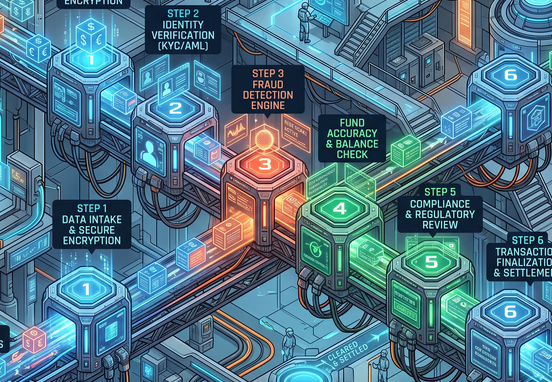
Architectural Map of a Verified Billing Validation Pipeline
The diagram below outlines the system validation path that a custom checkout pipeline executes to secure data and prevent transaction leaks.
[Front-End Checkout Form Submitted]
                │
                ▼
  [Generate Client-Side Idempotency Key]
                │
                ▼
  [Server-Side Integrity & Price Verification]
                │
                ▼
     ┌──────────────────────┐
     │  Is Key in Cache?   │
     └──────────┬───────────┘
                ├─── YES ──► [Return Existing Session State]
                └─── NO ───► [Write Active Status to Memory Cache]
                                 │
                                 ▼
                     [Execute Payment Gateway API]
                                 │
                                 ▼
                    ┌────────────────────────┐
                    │ Was Charge Successful? │
                    └────────────┬───────────┘
                                 ├─── NO ──► [Trigger Fallback & Release Cache]
                                 └─── YES ─► [Commit Database Rows Authentically]
                                                 │
                                                 ▼
                                     [Sync External Ledger Systems]
Strategic Mitigation of Inbound Transaction Errors
When high-volume digital environments struggle with broken transactions, the root cause usually stems from unverified checkout parameters. Allowing a client browser to dictate final pricing metrics introduces major vulnerabilities to data manipulation tools.
Savvy organizations must deploy systems engineered to detect system errors and automate data validation prior to authorizing an external payment module. The master application architecture must recalculate all cart variables, tax distributions, and regional shipping profiles on a secure server environment, utilizing the front-end input exclusively as an unverified intent token.
Comprehensive Validation Routines for Transaction Paths
- Server-Side Parameter Verification: The billing engine pulls the item unique identifiers from the user's browser, queries the internal database directly, and builds the true invoice pricing independently.
- Dynamic Inventory Check: The code initiates an atomic reservation block on the selected database items, confirming physical availability before requesting client funds.
- Tax and Compliance Scans: The platform evaluates customer geolocation metrics to ensure compliance, running routines that show how custom web checkout pipelines automate ledger sync, variable sales tax, and split payments seamlessly.
- Gateway Protocol Transmission: The secure backend sends the validated transaction payload to the payment gateway alongside its unique tracking token.
- Post-Authorization Hook Execution: Once payment is confirmed, the engine marks the database reservation as closed, appends the billing log, and dispatches external user notifications.
System Architecture Tip: Never log raw payment credentials or unencrypted credit card payload objects within your internal application databases. Route sensitive customer payment vectors through secure, tokenized iframe paths to isolate your core business architecture from PCI compliance vulnerabilities.

Streamlining Webhook Listeners and Asynchronous Payment Processing
Modern payment gateways like Stripe, Adyen, and PayPal handle transactions asynchronously. When an enterprise initiates a processing cycle, the financial provider often responds with a pending status before sending a final webhook to confirm the transfer.
If your web platform lacks a dedicated, resilient webhook processing architecture, dropped packets will result in broken workflows. A custom billing design records every incoming webhook payload in its raw text format inside an immutable database table before starting any internal validation tasks. This structure ensures that if an internal processing step encounters an error, your engineers can re-run the exact webhook payload to restore data alignment.
Furthermore, building optimized transactional logic reduces processing overhead, enabling platforms to lower your cost per transaction using custom system pipelines. Minimizing reliance on heavy third-party tracking extensions reduces server resource strain and eliminates the micro-transaction middleware fees that erode thin margins over time.
Securing Real-Time Cash Flow via Automated Smart Retry Logic
Unpredictable transaction failures, such as temporary credit card holds or bank network routing issues, represent a major source of involuntary customer churn. Standard software solutions often react to these failures aggressively, immediately freezing user access and sending generic, alarming automated alerts.
Custom billing logic enables companies to build sophisticated, multi-tiered dunning strategies that intelligently navigate payment failures without disrupting cash flow. The application evaluates the specific error code returned by the financial gateway to determine the optimal path to recovery.
- Intelligent Error Parsing: If the gateway returns an error indicating temporary insufficient funds, the system schedules a recovery retry at a later time rather than canceling the account instantly.
- Algorithmic Retry Intervals: The application spaces out automated collection attempts using a smart exponential backoff sequence, maximizing the likelihood of a successful charge without triggering merchant fraud alerts.
- Automated Cascade Routing: If a primary merchant gateway suffers an extended regional outage, the custom billing engine routes the transaction to an alternate processor to ensure uninterrupted operations.
This proactive approach forms the foundation of a highly resilient digital platform. Organizations that build on these frameworks can explore advanced tactics outlined in guides like the bulletproof web pipeline how custom error controls and smart fallbacks prevent system blackouts. Treating billing architecture as a core, strategic business asset protects immediate operational cash flow and provides a secure, predictable foundation for long-term scalability.