

How Automated Audit Trails Keep a Growing Business Audit-Ready
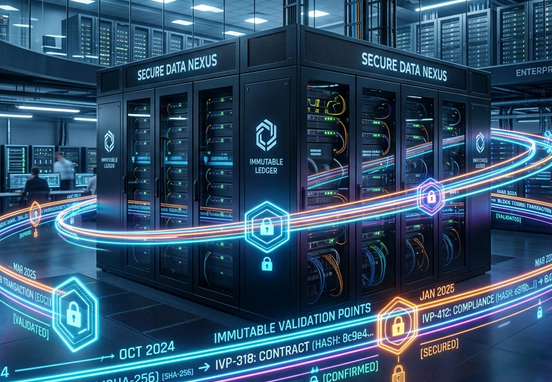
Scalability within a growing enterprise naturally introduces operational complexity. As daily transaction volumes surge, the sheer number of platform modifications, database reads, and administrative adjustments scales exponentially. Relying on manual spreadsheet logs or fragmented native app histories to track these changes is an operational hazard. When institutional regulators demand a full compliance verification, or an internal breach requires a forensic review, searching through siloed records creates severe friction and expensive delays.
An automated audit trail resolves this operational vulnerability by programmatically recording every single event within an organization's digital ecosystem. Instead of relying on human entry, automated systems capture system activity at the precise moment of execution. This continuous background documentation ensures the business remains persistently audit-ready. Transitioning to automated ledger logging minimizes regulatory risks, protects proprietary metrics, and provides unequivocal transparency for institutional stakes.
The Core Technical Foundations of Immutable System Logs
To build an asset capable of withstanding strict regulatory reviews, the logging system must operate under strict parameters of immutability. An audit log is entirely useless if an administrator with root access privileges can modify or delete historical entries to hide operational errors. Enterprise-grade logging requires a write-once-read-many (WORM) storage configuration, ensuring that once a data row is finalized, it cannot be altered by any user.
The system logs every system action as an isolated, time-stamped transaction. Each event entry captures the specific user identifier, the origin IP address, the destination API endpoint, the raw payload data, and the state of the database record before and after the event occurred. This level of granularity gives operations teams absolute visibility into their structural history.
Furthermore, these logs must be safely separated from the primary transactional database environments. If an unexpected server failure occurs, or a primary instance is compromised, the audit trail must survive completely intact. Organizations can achieve this structural isolation by utilizing robust pipelines that transfer logs offsite, ensuring you automatically back up business data and system logs every night into dedicated, access-controlled security vaults.
+-----------------------------------------------------------------+
|                    APPLICATION USER INTERFACE                   |
|  (User Action Trigger: Form Submit, Access Request, API Call)   |
+--------------------------------+--------------------------------+
                                 |
                                 v
+-----------------------------------------------------------------+
|                   APPLICATION CONTROLLER LAYER                  |
|  (Executes Identity Verification & Payload Structure Formatting)|
+--------------------------------+--------------------------------+
                                 |
         +-----------------------+-----------------------+
         | (State Change Log Payload Generated)          | (Core DB Write Action)
         v                                               v
+--------------------------------+               +--------------------------------+
|    IMMUTABLE LOG ROUTER NODE   |               |   PRIMARY TRANSACTION DATABASE |
|  - Cryptographic Hash String   |               | - Updates Core Business Rows   |
|  - Appends True Timestamp      |               | - Alters Inventory / Financials|
+--------------------------------+               +--------------------------------+
                                 |
                                 v
+-----------------------------------------------------------------+
|                 SECURE EXTERNAL WORM ARCHIVE                    |
|  (Isolated Storage Pool / Permanent Continuous Backup Node)     |
+-----------------------------------------------------------------+
The Operational Matrix: Manual Log Tracing vs. Automated Audit Trails
Evaluating your company's audit readiness requires a direct look at how information is gathered across your entire network architecture. Relying on disorganized manual processes introduces significant operational costs and security vulnerabilities that can hurt institutional valuation during due diligence reviews.
The matrix below highlights the specific differences between standard manual tracking methods and custom-engineered automated logging layers:
| Evaluation Variable | Manual & Disjointed Logs | Automated System Audit Trails |
|---|---|---|
| Data Integrity Assurance | Vulnerable to unauthorized alteration and deletion. | Cryptographically secured and completely immutable. |
| Collection Latency | Delayed entries compiled days after events occur. | Real-time event logging at sub-second speeds. |
| Operational Labor Cost | High internal head-count hours spent exporting files. | Completely hands-free programmatic background loops. |
| Forensic Search Precision | Fragmented spreadsheets with conflicting fields. | Indexed database architecture built for quick searches. |
| Regulatory Standing | High risk of compliance failures and major fines. | Persistent alignment with global regulatory mandates. |
Eliminating Regulatory Blind Spots Across Software Frameworks
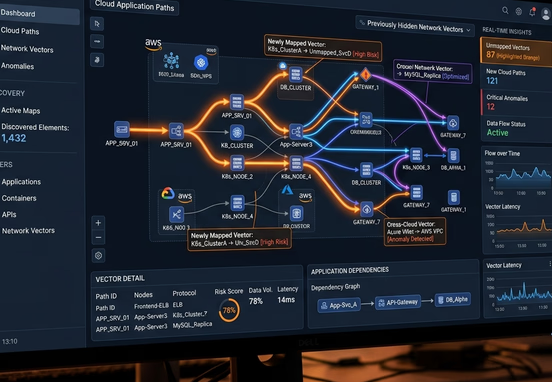
Mitigating Unmapped Applications and Data Silos
A significant challenge in modern enterprise data management is the rise of unmonitored, ad-hoc cloud tools adopted by individual teams without central IT approval. When employees use unverified software tools to manage client records or financial entries, key operational actions occur entirely outside the view of centralized logging systems. This separation creates major compliance gaps that can result in unexpected liabilities during external audits.
Leaving these unmonitored systems unchecked threatens data security and drains corporate resources. Unvetted cloud infrastructure can cost businesses significantly over time through unmapped usage overages and redundant system contracts. Leadership can identify these hidden liabilities by reviewing how shadow IT costs enterprises millions in hidden software fees, allowing you to bring these isolated systems back under centralized administrative oversight.
Standardizing Essential Data Ingestion Matrices
To ensure system logs pass external compliance checks, every recorded payload must include a standardized set of key metrics. A chaotic log that lacks unified fields or explicit origin tracking fails to provide clear evidence during institutional reviews.
Every automated event log must track these core system elements:
- True System Timestamp: The precise millisecond an action occurred, synchronized via universal network time protocols.
- Unique Actor Identifiers: The precise user UUID linked directly to the individual who authorized the transaction.
- Explicit Change Vectors: Clear text representations showcasing the original database field values alongside the new adjustments.
- Network Origin Signatures: The explicit IP addresses and browser signatures used to connect to the network core.
- System Response Telemetry: Verification status showing if the requested transaction was successfully completed or blocked by security rules.
Securing the Log Archive: Access Control and Governance Architecture
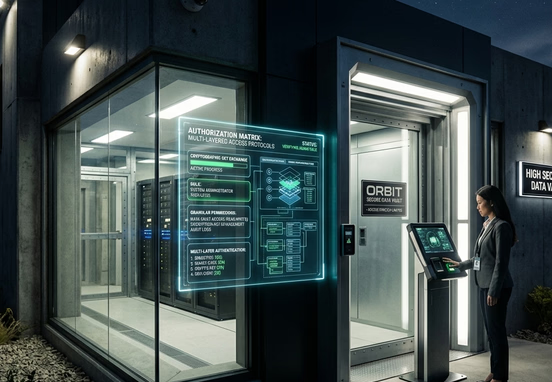
System Infrastructure Tip: Always restrict visibility to your automated log archive using separate authentication networks entirely distinct from your regular user management databases. If an administrator account on your main production application is ever compromised, the attacker must still be blocked from editing or viewing historical audit logs. Securing this infrastructure requires utilizing distinct, isolated permission rules for log reviews.
Protecting these historical records requires strict control over internal system access permissions. Even inside the engineering department, only specialized compliance officers should have visibility into your system log arrays. Limiting access requires setting up highly granular permission layers across your entire tech stack. By deploying strict role-based system permissions to keep sensitive data safe at scale, you ensure that only authorized personnel can generate historical compliance records, preventing internal database leaks.
Furthermore, continuous tracking metrics provide the fundamental data needed to support major business pivots and strategic choices. When executive leadership evaluates historical operational performance, they must be confident that their data is accurate and free from manual errors. Feeding these secure, automated logs into a centralized web data hub that supports executive decision-making gives your C-suite clear visibility into organizational trends, allowing them to scale the company with absolute structural confidence.
- Event Generation: A user triggers an action within the digital architecture, generating a data payload.
- Schema Verification: The ingestion platform confirms the payload matches your standard structural definitions.
- Cryptographic Inscription: The system signs the entry with unique validation hashes to prevent future log tampering.
- Vault Archiving: The verified entry commits directly into an isolated, access-controlled data storage pool.

Deploying Bespoke Systems Architecture for Long-Term Readiness
Transitioning away from fragmented spreadsheet logging requires a deliberate approach to backend systems engineering. Many businesses fall into the trap of deploying generic compliance tracking plugins or basic third-party widgets. These cookie-cutter solutions add unnecessary system overhead, fail to integrate cleanly with legacy enterprise tools, and often introduce unexpected security vulnerabilities into your main code bases.
True operational efficiency is achieved by developing custom compliance architecture designed specifically around your day-to-day business processes. Partnering with expert engineers to deploy a bespoke workflow and systems automation platform allows you to establish smooth, high-performance logging loops built directly into your core code engines. This custom foundation keeps your growing company persistently aligned with shifting global standards, isolates your critical records from application crashes, and empowers your organization to scale confidently without compliance bottlenecks.